Mission Poshan 2.0 Strengthens India’s Integrated Approach to Nutrition and Early Childhood Development

India’s national nutrition strategy has evolved significantly since the launch of the POSHAN Abhiyaan in 2018, positioning nutrition as a core element of human capital development. The programme now operates under Mission Poshan 2.0, which integrates multiple nutrition and early childhood initiatives into a single framework. According to the official government release, the mission combines technology-enabled monitoring, cross-ministerial coordination and community engagement to strengthen nutrition outcomes across the country.
Implemented by the Ministry of Women and Child Development, the initiative links more than 26 ministries and departments in an effort to address the multi-dimensional causes of malnutrition. The programme emphasises preventive care and focuses particularly on the first 1,000 days of life—from conception to a child’s second birthday—recognised as a critical period for physical growth, brain development and long-term health outcomes.
From POSHAN Abhiyaan to Mission Poshan 2.0
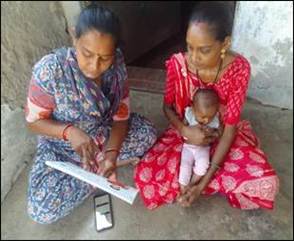
India’s nutrition programmes were historically implemented through multiple schemes administered by different ministries. While these initiatives addressed various aspects of malnutrition, policymakers increasingly recognised the need for a coordinated approach. Integrated Child Development Services (ICDS), launched in 1975, laid the foundation through Anganwadi centres delivering supplementary nutrition, health services and early childhood care.
Subsequent policy developments strengthened this framework. The Pradhan Mantri Matru Vandana Yojana introduced maternity benefits through direct cash transfers, while the National Nutrition Strategy (2017) recommended a mission-driven approach with stronger monitoring and community participation. These developments culminated in the launch of POSHAN Abhiyaan in 2018 and its later consolidation into Mission Poshan 2.0 under the Union Budget 2021–22.
The restructured mission brings together several schemes, including Anganwadi Services, the Scheme for Adolescent Girls and POSHAN Abhiyaan, creating a unified platform for addressing maternal nutrition, infant and young child feeding practices and the treatment of severe and moderate acute malnutrition.
Strengthening Nutrition Support and Local Food Systems
Supplementary nutrition is provided to children aged six months to six years, pregnant women, lactating mothers and adolescent girls in accordance with the National Food Security Act, 2013. Updated nutrition norms introduced in January 2023 place greater emphasis on balanced diets that include quality proteins, healthy fats and essential micronutrients such as calcium, iron and vitamin B12.
Local initiatives also support dietary diversity. Nutrition gardens—often referred to as Poshan Vatikas—are being developed at Anganwadi centres, schools and village council land to encourage the consumption of locally available fruits, vegetables and medicinal plants.
Community-level protocols have been introduced to improve the identification and management of child malnutrition. Anganwadi workers conduct regular growth monitoring and screening activities, referring severe cases to health facilities or nutrition rehabilitation centres while supporting non-complicated cases through home-based care and locally available nutritious foods.
Integrating Early Childhood Care and Education
Mission Poshan 2.0 places strong emphasis on early childhood care and education (ECCE), aligning with the National Education Policy 2020 and the five-year foundational stage covering preschool and early primary schooling. Play-based and participatory learning approaches are used to support children’s cognitive, social and emotional development before they enter formal schooling.
The “Poshan Bhi Padhai Bhi” initiative aims to improve the quality of ECCE services delivered through Anganwadi centres by strengthening infrastructure, providing learning materials and enhancing the training of frontline workers. By March 2026, more than 41,000 state-level master trainers and over one million Anganwadi workers had received training in ECCE pedagogy and nutrition service delivery.
New national curricula introduced in 2024—Navchetna for children from birth to three years and Aadharshila for those aged three to six—provide structured activities to support early stimulation, language development, play-based learning and parental engagement.
Efforts are also underway to strengthen the transition between early childhood services and formal schooling. More than 290,000 Anganwadi centres have been integrated with government primary schools to support continuity in early learning.
Digital Governance Through the Poshan Tracker
A central feature of the programme is the use of digital tools to strengthen governance and accountability. The Poshan Tracker, launched on 1 March 2021, enables near real-time monitoring of Anganwadi operations, service delivery and beneficiary outcomes.
The platform tracks pregnant women, lactating mothers, children under six and adolescent girls, while recording data on attendance, early learning activities and growth monitoring. As of March 2026, the system covered more than 1.4 million Anganwadi centres and nearly 90 million beneficiaries.
Technological features such as Aadhaar-linked identification and facial recognition verification are intended to strengthen beneficiary authentication and reduce leakages. Digital governance approaches of this kind are increasingly shaping public service delivery in India, complementing broader government initiatives such as the use of advanced technologies in infrastructure monitoring and environmental management, including AI and GIS tools for dam safety oversight and wider digital transformation strategies outlined in India’s national vision for responsible AI.
Community Mobilisation Through National Campaigns
Beyond programme delivery, the initiative seeks to position nutrition as a nationwide social movement. Public engagement campaigns such as Poshan Maah (National Nutrition Month) and Poshan Pakhwada (Nutrition Fortnight) encourage communities to adopt healthier nutrition and caregiving practices.
The eighth Poshan Pakhwada, held from 9 to 23 April 2026, focuses on maximising brain development during the first six years of life. Campaign activities highlight maternal and child nutrition, early stimulation, play-based learning and the role of families and communities in reducing excessive screen time among young children.
These campaigns mobilise Anganwadi networks, local institutions and multiple government departments to conduct awareness drives, health camps, growth monitoring sessions and community outreach programmes.
Long-Term Investment in Human Capital
After eight years of implementation, India’s nutrition mission illustrates the growing role of integrated governance, digital monitoring and community participation in addressing complex public health challenges. By linking nutrition services with early childhood education, healthcare and social protection programmes, Mission Poshan 2.0 aims to improve developmental outcomes for vulnerable populations.
Improved nutrition outcomes are closely associated with stronger learning outcomes, productivity and long-term economic development. As India pursues its goal of becoming a developed nation by 2047, sustained investment in nutrition systems and early childhood development is expected to remain central to building a healthier and more resilient population.