India Launches e-SafeHER Programme to Train One Million Rural Women in Cybersecurity Awareness

India has launched e-SafeHER, a cybersecurity awareness training programme designed to help women in rural areas participate safely in the digital economy. Announced by the Ministry of Electronics and Information Technology (MeitY) in partnership with the Centre for Development of Advanced Computing (C-DAC), Hyderabad and the Reliance Foundation, the initiative aims to train one million women over the next three years. According to the official government announcement, the programme will focus on strengthening cyber awareness among women who increasingly rely on digital platforms for financial transactions, livelihoods and access to essential services.
The initiative operates under MeitY’s Information Security Education and Awareness (ISEA) programme. By combining technical training resources with community-based outreach, e-SafeHER seeks to promote secure digital participation and strengthen confidence in online services among rural communities.
Building Cybersecurity Awareness Among Rural Women
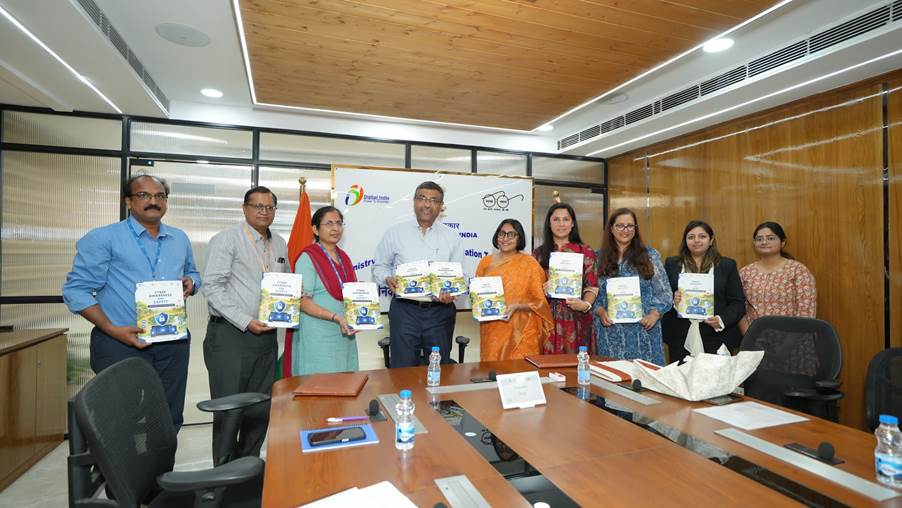
e-SafeHER is designed as a gender-sensitive, community-led model to improve cybersecurity awareness at the grassroots level. Many women in rural India now rely on digital platforms for banking, welfare benefits and entrepreneurship. However, limited awareness of cyber risks can leave users vulnerable to online fraud, identity theft and other digital threats.
The programme seeks to address this gap by equipping participants with practical knowledge on safe online practices, recognising cyber risks and protecting personal information. It will also support women in adopting secure digital payment and communication tools as digital services expand across the country, alongside broader connectivity initiatives such as the expansion of 4G, 5G and satellite-based networks in India.
Partnership Model for National Reach
The programme brings together the technical expertise of C-DAC with the community networks of the Reliance Foundation. Under the ISEA framework, C-DAC will develop and update cybersecurity training materials, including multilingual resources tailored to diverse regional contexts.
The Reliance Foundation will support implementation through its grassroots presence in rural communities. The initiative will rely on women’s self-help groups and peer-led learning approaches to deliver training and encourage the adoption of safe online habits.
Phased Rollout to Train One Million ‘Cyber Sakhis’
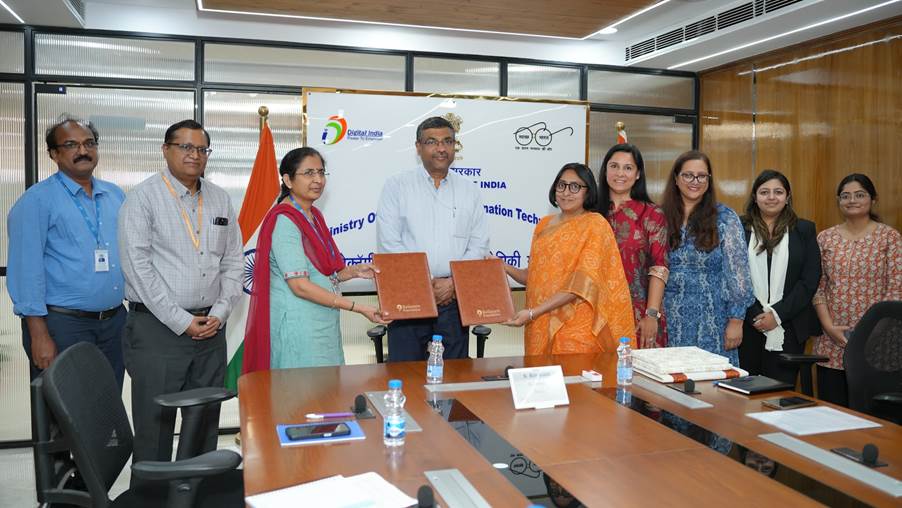
The rollout will begin in Madhya Pradesh and Odisha, where women will be trained as community cyber awareness advocates, referred to as Cyber Sakhis. These participants will help share cybersecurity knowledge within their local communities, creating a multiplier effect for digital safety education.
Over time, the programme will expand through multi-stakeholder partnerships, with the goal of reaching one million women across India by 2029. The design emphasises scalability and sustainability by integrating cybersecurity awareness into existing digital literacy and women’s empowerment programmes.
Training resources will include localised content, audio-visual learning modules and blended training approaches to improve engagement and accessibility. The programme also aims to produce measurable outcomes, including improved awareness of cyber threats, greater confidence in digital transactions and wider adoption of secure online practices.
Supporting Safe Digital Inclusion
India’s digital transformation has brought millions of citizens online, creating new opportunities for financial inclusion, education and entrepreneurship. At the same time, policymakers increasingly recognise that digital adoption must be accompanied by stronger cybersecurity awareness and safeguards.
Initiatives such as e-SafeHER reflect a broader policy emphasis on ensuring that digital participation is both inclusive and secure. Similar programmes highlighted in the India AI casebook on gender empowerment initiatives also demonstrate how technology-driven programmes can support women’s participation in the digital economy when combined with targeted training and community engagement.
By combining national cybersecurity frameworks, technical training expertise and grassroots community networks, the e-SafeHER initiative aims to ensure that women in rural India are not only digitally connected but also equipped to navigate the online environment safely.