Vietnam Reviews Power Development Plan VIII Projects at Son La Hydropower Complex

Vietnam’s Ministry of Industry and Trade has reviewed the progress of electricity generation and grid projects under the revised Power Development Plan VIII during a working visit to Son La province. According to information published by the Ministry of Industry and Trade, the delegation assessed the operation of major hydropower facilities and examined how projects in the national power plan are being implemented locally. The review focused on operational performance, system stability and coordination between central agencies, the provincial government and state-owned electricity operators.
Government Delegation Reviews Hydropower Operations
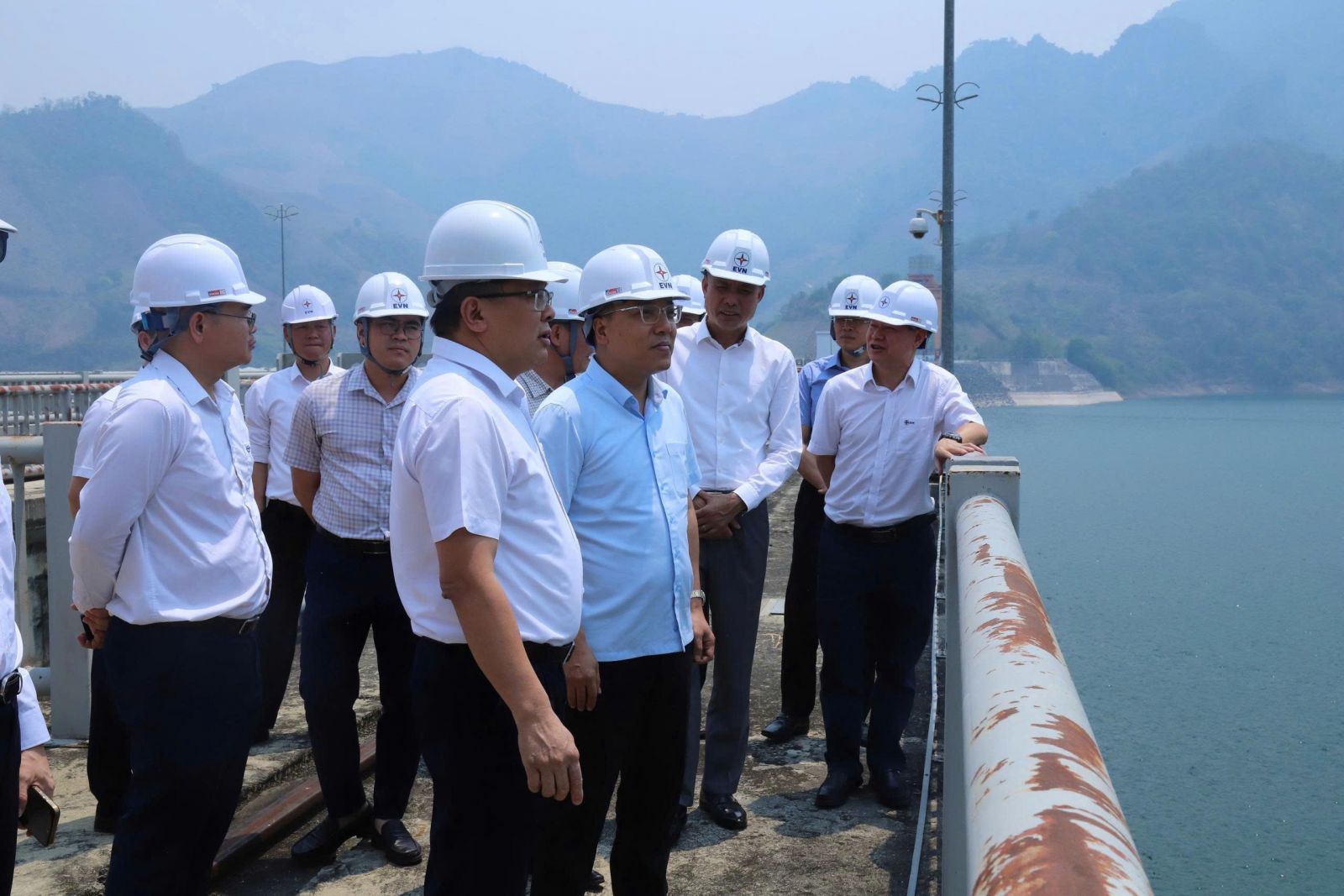
The inspection took place on 13 April 2026 and was led by Deputy Minister Nguyen Hoang Long. Representatives from the Electricity Authority of Vietnam, the National System and Market Operator (NSMO), the Office of the National Energy Steering Committee, Vietnam Electricity (EVN) and related agencies joined the visit.
Provincial authorities also participated, including Nguyen Thanh Cong, Vice Chairman of the Son La Provincial People’s Committee, alongside leaders from local departments and enterprises. Discussions focused on the status of power generation assets and transmission infrastructure associated with the revised national electricity development plan.
Performance of Son La and Lai Chau Hydropower Plants
Son La Hydropower Company currently manages and operates the Son La and Lai Chau hydropower plants, which together have a total installed capacity of 3,600 megawatts (MW). The two facilities play a significant role in maintaining electricity supply and supporting grid stability in northern Vietnam.
In 2025, the company reported that operations met or exceeded the technical and economic targets set by EVN. Across both plants, nine generating units operate regularly in frequency and voltage regulation modes to support the stability of the national power system.
Total electricity production in 2025 reached 14.507 billion kilowatt-hours (kWh), equivalent to 111.94% of the target assigned by EVN. Of this output, the Son La plant generated 9.671 billion kWh, or 113.24% of plan, while the Lai Chau facility produced 4.836 billion kWh, reaching 109.42% of its assigned target.
The operations also contributed significantly to public finances. Combined payments to the state budget totalled VND 3.18 trillion, including VND 1.324 trillion allocated to Son La province.
Operational Stability in Early 2026
From the beginning of 2026 to 10 April, both hydropower plants reported stable operations with no incidents affecting personnel or equipment. The facilities continued to comply with dispatch instructions issued by the NSMO while maintaining safe generation levels.
During this period, electricity output reached 1.4587 billion kWh at the Son La plant and 448.14 million kWh at the Lai Chau plant. These figures represent 16.98% and 10.68% respectively of the annual production targets assigned by EVN.
Strengthening Operational Discipline and Risk Preparedness
During the working session, Deputy Minister Nguyen Hoang Long emphasised the need to maintain strict operational discipline across all generating units and related infrastructure. He called on plant operators to comply fully with safety regulations, technical standards and water management procedures.
The deputy minister also urged closer coordination with provincial authorities and central agencies in disaster prevention and response. Effective management of water resources and reservoir operations, particularly during extreme weather conditions, was highlighted as essential for ensuring safe and reliable plant performance.
The visit reflects broader efforts by the Vietnamese government to strengthen national infrastructure planning and operational oversight as the country modernises key systems alongside wider initiatives such as Vietnam’s 5G rollout and preparations for future 6G networks. These developments form part of a wider push to support economic growth and technological capacity, including international cooperation such as Vietnam’s emerging collaboration with the European Union on artificial intelligence.