Vietnam Ministry of Industry and Trade Reviews 2025 Performance and Sets Digital Reform Priorities

The Ministry of Industry and Trade has convened its 2025 conference for officials, public employees and workers to review performance, assess administrative reforms and set priorities for the year ahead. The meeting examined progress against national policies, budget execution and digital government initiatives, while outlining organisational and governance reforms as Vietnam prepares for a new development phase.
The conference was attended by Deputy Minister Nguyen Hoang Long alongside leaders of departments and functional units. Chaired by Acting Minister Le Manh Hung, the event reviewed the implementation of Party resolutions, state policies and the outcomes of commitments made at the 2024 officials’ conference, drawing on reports published by the Ministry and outlined in the official conference summary.
Economic context and institutional pressures in 2025
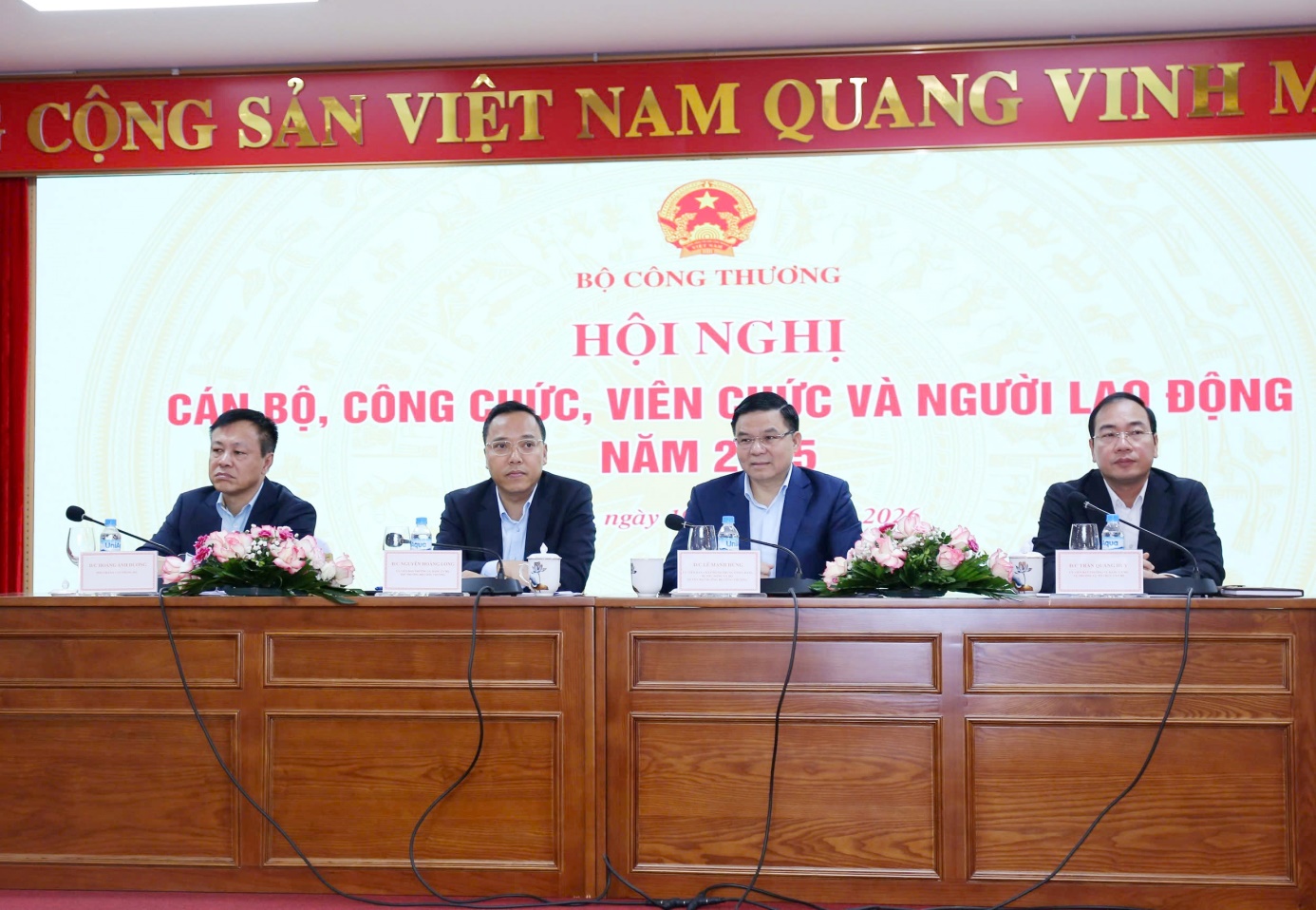
According to Tran Quang Huy, Director General of the Department of Organisation and Personnel, 2025 marked the final year of the 2021–2025 socio-economic development plan. The year was characterised by what he described as a “dual impact” from adverse global conditions and increasingly severe natural disasters, placing additional strain on economic growth and public administration.
The Ministry also operated against a backdrop of significant institutional change, including preparations for Party congresses at all levels and the restructuring of administrative organisations under Resolution No 18-NQ/TW dated 25 October 2017. These reforms include the transition towards a two-tier local government model, requiring closer coordination between central and local authorities.
Administrative reform and digital government delivery
On administrative reform, the Ministry reported substantial progress in decentralisation and digital service delivery. A total of 197 administrative procedures have been delegated to local authorities, with senior departmental officials assigned to support 34 provinces and cities during the transition to the new governance model.
The Ministry is now providing 225 online public services, covering all ministerial-level administrative procedures. Of these, 168 are delivered end-to-end online, with more than 160,000 organisations and individuals using the platforms regularly. These efforts align with broader national digital government ambitions, similar to initiatives seen in other ministries pursuing full digitalisation and local innovation highlighted in Da Nang’s smart governance programmes.
Strategic direction set by the Acting Minister
In his concluding address, Acting Minister Le Manh Hung noted that despite economic challenges, the industry and trade sector had completed a significant volume of work in 2025, contributing materially to national growth. He identified three core missions for the sector: ensuring national energy security, supporting industrialisation and modernisation, and safeguarding trade and international integration.
“We must have a firm grasp of the sector’s key indicators, strategic direction and specific tasks to be implemented, thereby contributing to the achievement of common goals,” — Le Manh Hung, Acting Minister, Ministry of Industry and Trade
He called for time-bound, results-focused management and more effective resource allocation. The Ministry’s Office was tasked with reviewing facilities and working conditions across its premises to support standardisation and improved productivity, alongside the streamlining of internal processes and reporting systems.
Legal consolidation and digital transformation priorities
On legal and regulatory work, the Acting Minister instructed the Department of Legal Affairs to systematise the sector’s legal framework into four coherent sets covering general provisions, energy, industry and trade. Training in legal fundamentals and legislative drafting is to be rolled out for all officials to strengthen policy capacity.
For e-commerce and the digital economy, the Department of E-commerce and Digital Economy was directed to deploy electronic handbooks and digital work management platforms, ensuring consistent use across the Ministry. These steps form part of a wider push to accelerate approved digital transformation strategies and establish unified governance for digital architecture and data, echoing cross-sector technology integration efforts such as those described in Vietnam’s broader technology adoption agenda.
Looking ahead to 2026, the Ministry aims to focus on standardisation, capability building and sustainable development. The leadership called on all officials and employees to maintain discipline, strengthen internal cohesion and embrace new ways of working to support the next stage of the sector’s development.