Thailand and Australia Expand Cooperation on Pharmaceutical and Vaccine Manufacturing

Thailand and Australia are strengthening cooperation to expand domestic pharmaceutical and vaccine manufacturing capacity, with the aim of improving health security and access to essential medicines across Southeast Asia. The joint initiative, known as Biologics and Pharmaceuticals Manufacturing in Thailand for Equitable Access to Medicines (BPM‑TEAM), brings together research institutions and public agencies from both countries to advance local production of active pharmaceutical ingredients (APIs) and biologic medicines. Details of the collaboration were outlined during a joint announcement at Thailand Science Park in Pathum Thani, as reported by the Ministry of Higher Education, Science, Research and Innovation. The four‑year programme is supported by A$1.75 million from the Australian Government’s Partnerships for a Healthy Region initiative.
The project is led by Australia’s Commonwealth Scientific and Industrial Research Organisation (CSIRO) and involves key Thai partners including the National Center for Genetic Engineering and Biotechnology (BIOTEC), the National Science and Technology Development Agency (NSTDA), the Government Pharmaceutical Organisation (GPO), and the National Biopharmaceutical Facility at King Mongkut’s University of Technology Thonburi.
Building Capacity for Domestic Pharmaceutical Production
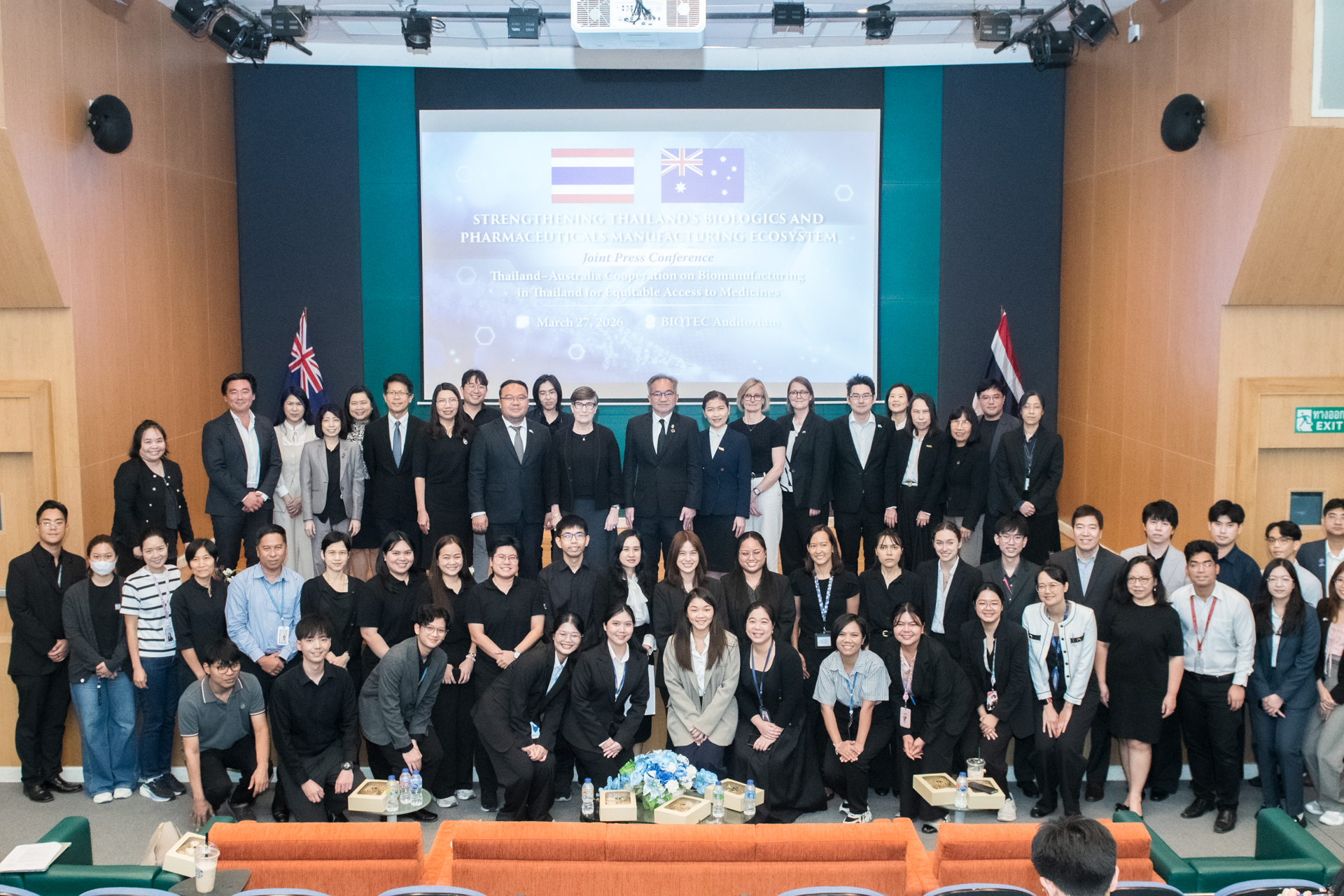
The collaboration focuses on strengthening Thailand’s ability to manufacture active pharmaceutical ingredients (APIs) and biologic medicines locally. Currently, Thailand imports more than 95 per cent of its APIs, leaving the country vulnerable to disruptions in global supply chains. By developing domestic production capabilities, policymakers aim to reduce dependence on imports while improving resilience during future health emergencies.
Researchers from both countries have been working jointly since December 2024 through laboratory training, knowledge exchange, and collaborative process development. Training sessions have taken place in CSIRO laboratories in Australia, providing Thai researchers with hands‑on experience in API synthesis, biologics manufacturing processes, and laboratory best practice.
Advanced production technologies such as flow reactors and continuous‑flow chemistry are being applied to improve manufacturing efficiency and scalability. Thai partners have already begun adapting these approaches to local production processes.
Early Progress in Essential Medicine Production
One early milestone involves the successful development of a synthesis process for abacavir hemisulfate, an antiretroviral medicine used to treat HIV. The compound has been produced at a pre‑pilot scale with high yield and purity. Testing in a 10‑litre reactor demonstrated the ability to manufacture approximately 2,000 HIV treatment tablets, indicating that the process could be expanded further for domestic production.
Encouraged by these results, the research teams are expanding API development to additional medicines, including treatments for HIV and diabetes. The adoption of continuous‑flow synthesis methods is also expected to improve efficiency, support environmentally responsible manufacturing, and create opportunities for pharmaceutical exports to ASEAN markets.
These initiatives complement broader national efforts to strengthen Thailand’s research and innovation ecosystem, including programmes supporting technology and data for sustainable development and initiatives that promote advanced research capabilities across multiple sectors.
Advancing Biologics and Vaccine Development
In parallel with API development, the BPM‑TEAM programme is advancing capabilities in biologics manufacturing, particularly in the development of monoclonal antibodies used to treat cancers and infectious diseases. Progress has been reported in cell line development, upstream production processes, pilot‑scale bioreactor operations, and analytical systems for product quality control.
Thai researchers have also received specialised training on experimental design, production workflows, and quality documentation required for future technology transfer to facilities operating under Good Manufacturing Practice (GMP) standards.
The collaboration also supports Thailand’s vaccine development agenda, including work related to African swine fever (ASF). Improvements in production scale‑up, quality control systems, and technology transfer processes are helping bridge the gap between laboratory research and real‑world manufacturing.
Strengthening the Regional Biomanufacturing Ecosystem
Beyond specific research outcomes, the partnership aims to strengthen Thailand’s broader biopharmaceutical ecosystem. This includes improvements in project management, operational safety, and coordination across the research‑to‑manufacturing pipeline. Facilities such as the National Biopharmaceutical Facility are expected to serve as translational hubs capable of scaling laboratory discoveries towards pilot production and eventual clinical testing.
The programme also prioritises workforce development through sustained researcher exchanges and training initiatives. By building technical expertise alongside manufacturing infrastructure, policymakers hope to ensure that future innovations can move efficiently from research to production.
This approach aligns with wider national strategies aimed at leveraging advanced science and innovation to improve public services and social outcomes, similar to initiatives exploring how AI and digital innovation can enhance equitable welfare in Thailand.
Looking ahead, CSIRO and its Thai partners plan to scale up manufacturing processes, expand personnel exchanges, and deepen technical collaboration. The long‑term objective is to improve reliable access to essential medicines while strengthening regional health security across ASEAN.