Thailand Advances Nanotechnology to Improve Energy Efficiency and Solar Performance

Thailand’s National Nanotechnology Center (Nanotec) is advancing a set of research-driven technologies aimed at reducing electricity demand and improving the efficiency of renewable energy systems during periods of extreme heat. Developed under the National Science and Technology Development Agency (NSTDA), the innovations include heat-reducing building coatings, anti-dust coatings for solar panels, and next-generation perovskite solar cells. According to the announcement from the Ministry of Higher Education, Science, Research and Innovation, the technologies are designed to help address rising electricity consumption driven by increasingly hot weather and to strengthen Thailand’s long-term energy resilience.
The research reflects Thailand’s broader effort to use science and technology to support sustainable development and climate resilience. Recent initiatives across the country have emphasised the role of research institutions and universities in building innovation ecosystems, as highlighted in efforts focused on driving innovation and sustainability across higher education and strengthening collaboration between research organisations and industry.
Nanotechnology Solutions to Reduce Cooling Demand
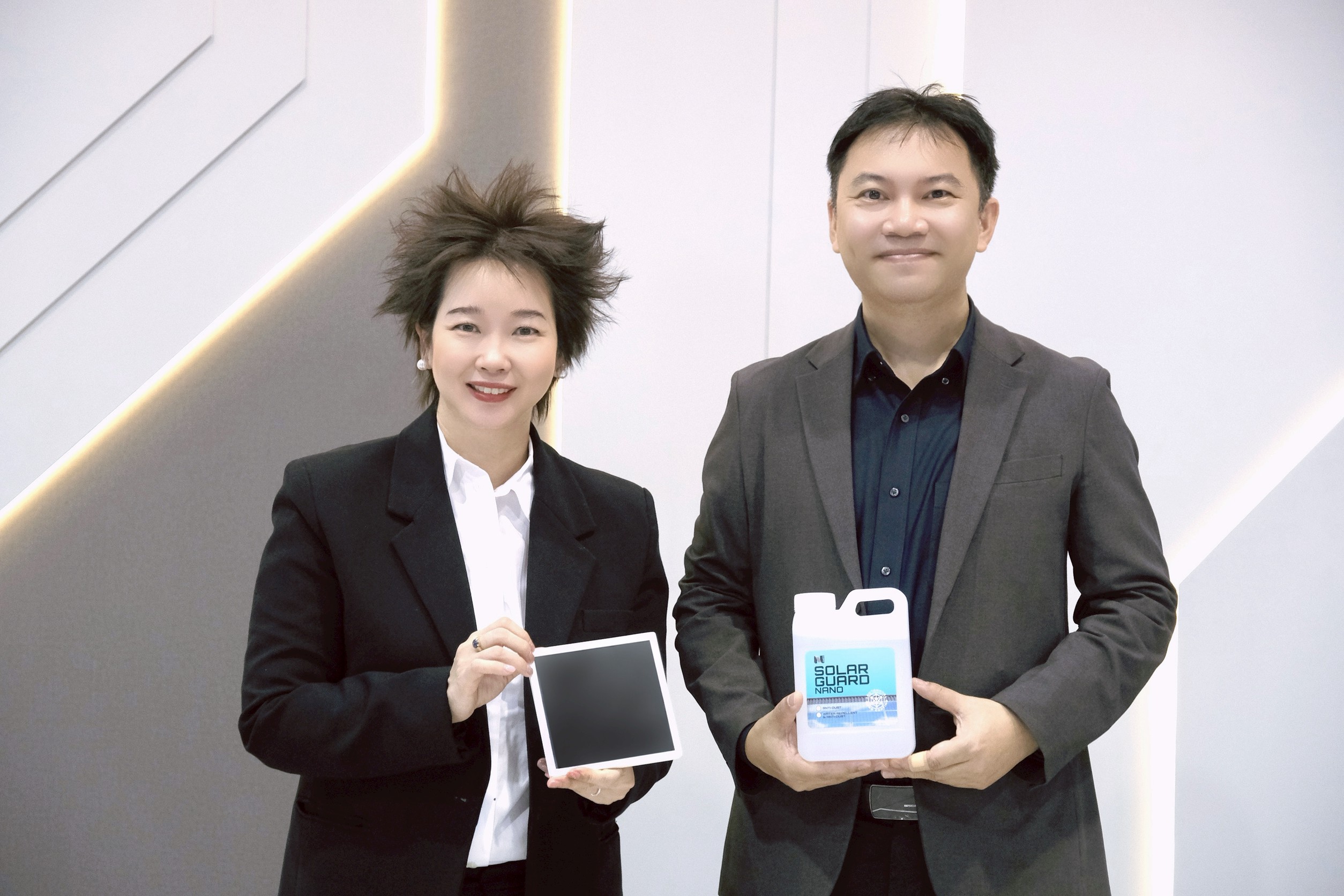
One focus area is nanotechnology-based coatings designed to lower building temperatures and reduce energy consumption from air conditioning. The coatings, developed by the Hybrid Materials and Nanocomposites Processing Research Group at Nanotec, are engineered to reflect solar radiation and dissipate heat more effectively.
Testing indicates the technology can reduce building surface temperatures by around 3–4°C compared with products currently available on the market. Lower surface temperatures can translate into reduced cooling loads, potentially cutting air-conditioning electricity consumption by up to 15% in suitable buildings.
“หัวใจสำคัญของนวัตกรรมนี้ คือ การลดความต้องการใช้พลังงาน (Energy Demand) โดยตรง ผ่านสีและสารเคลือบภายนอกเพื่อลดความร้อน ซึ่งออกแบบให้มีการสะท้อนรังสีอาทิตย์สูงและการคายความร้อนสู่ภายนอกได้ดี” — Dr Pisit Khamnoedkaew, Director of the Hybrid Materials and Nanocomposites Processing Research Group, Nanotec
Such solutions are particularly relevant in Thailand, where April typically marks one of the most energy-intensive periods of the year as temperatures rise and electricity demand increases across households and businesses.
Improving Solar Panel Performance in Dusty Environments
Nanotec has also developed an anti-dust nanocoating designed to improve the performance of solar photovoltaic panels. Dust accumulation on panel surfaces, often referred to as the soiling effect, can significantly reduce power generation in real-world conditions.
The coating allows dust and dirt to detach more easily from the surface while maintaining high light transmission. It can be applied directly to panels without special surface preparation and can be removed without damaging the panel or affecting manufacturer warranties.
Tests indicate that the technology can increase electricity generation by between 3% and 30%, depending on environmental conditions and the level of dust accumulation. Under typical operating conditions, the average improvement is around 5%. The coating can also reduce water use and operational costs associated with cleaning solar installations.
Exploring Next-Generation Perovskite Solar Cells
Alongside these applied technologies, researchers are developing perovskite solar cells, a new generation of thin-film photovoltaic technology. Compared with conventional silicon cells, perovskite-based systems require less material, can be produced at lower temperatures, and are lighter and potentially semi-transparent.
The material’s flexibility means it could be integrated into a wider range of surfaces, including curved structures, building glass, portable devices, and low-power electronics such as environmental sensors or wireless indoor systems. Future development may also include tandem solar cells that combine perovskite with silicon to increase overall power conversion efficiency.
However, researchers note that challenges remain before the technology can be widely commercialised. Improving long-term stability under heat, humidity, and light exposure remains a key global research focus.
Pilot Projects for Energy-Resilient Public Infrastructure
Nanotec is currently piloting these innovations through a programme known as Nanocoating Solutions for Energy-Resilient Government Infrastructure. The initiative aims to deploy heat-reducing building coatings and anti-dust solar panel coatings in government facilities with high and continuous energy use.
Field testing of the anti-dust coating has already begun, while the building heat-reduction coating is being expanded to pilot-scale trials and longer-term field evaluation. Both technologies are seeking partners for commercial production.
The anti-dust coating has already been transferred to Nano Coating Tech Co Ltd, a deep-tech startup under NSTDA. Researchers estimate that if the technology were deployed across around 20% of Thailand’s solar generation capacity by 2030—roughly 2.5 gigawatts—it could increase annual electricity production by about 197.1 gigawatt-hours. This could generate economic value estimated at THB 700–800 million annually while reducing carbon dioxide emissions by around 90,000 tonnes per year.
These developments illustrate how locally developed technologies can support national priorities in energy efficiency and emissions reduction. Similar policy efforts have emphasised connecting technological innovation with community and economic development, as seen in programmes focused on bridging innovation and community development in Thailand.