Thailand Advances Nanotechnology Solutions to Reduce Energy Use During Extreme Heat

Thailand is advancing a range of nanotechnology-based energy solutions aimed at reducing electricity demand and improving the performance of clean energy systems during periods of extreme heat. Researchers at the National Nanotechnology Center (NANOTEC), under the Ministry of Higher Education, Science, Research and Innovation, are developing materials such as heat-reducing building coatings, anti-dust coatings for solar panels, and next-generation perovskite solar cells. According to details published by the ministry in an official announcement, these technologies aim to reduce energy consumption at source while strengthening the long‑term efficiency of renewable energy infrastructure.
The initiative comes as Thailand experiences sustained periods of high temperatures, driving electricity demand to seasonal peaks, particularly due to widespread use of air conditioning in households and commercial buildings. Researchers say technological solutions that reduce cooling demand or improve renewable energy output can play a practical role in strengthening national energy resilience. The work builds on broader national efforts to advance research and innovation, similar to initiatives highlighted in Thailand’s push to expand innovation and digital infrastructure.
Nanocoatings Designed to Reduce Building Heat
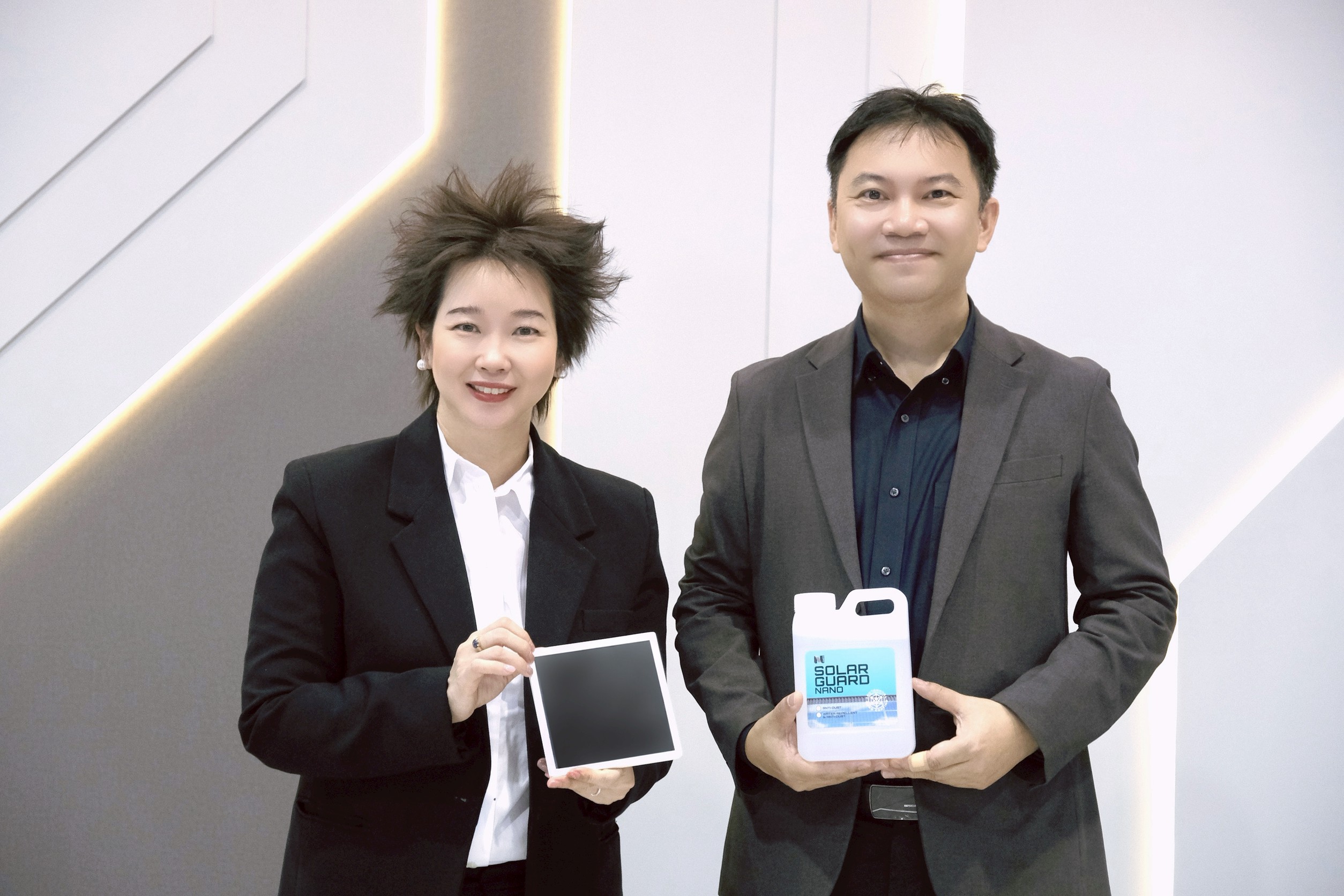
One of the technologies under development is a heat‑reducing exterior paint and coating designed for buildings. The material reflects solar radiation while enabling effective heat dissipation, lowering both surface and indoor temperatures. Tests conducted by the research team show that treated surfaces can be up to 3–4 degrees Celsius cooler than conventional products currently available on the market.
Lower building temperatures reduce the operational load on air‑conditioning systems. Researchers estimate that the coating could reduce electricity consumption from air conditioning by as much as 15% in suitable buildings, particularly those with high cooling demand during Thailand’s hottest months.
Improving Solar Panel Efficiency with Anti‑Dust Coatings
NANOTEC researchers are also developing an anti‑dust nano coating for solar panels. Dust accumulation, known as the soiling effect, can significantly reduce the amount of electricity generated by photovoltaic systems. The new coating is designed to limit the adhesion of dust and dirt on the panel surface while maintaining high light transmission.
The coating can be applied directly to solar panels without surface preparation and can be removed through normal cleaning processes without damaging the panel or affecting manufacturer warranties. Testing suggests the coating can improve electricity generation by between 3% and 30%, depending on dust levels and environmental conditions, with typical improvements around 5%.
The technology has already been transferred to Nano Coating Tech Co Ltd, a deep‑tech start‑up associated with the National Science and Technology Development Agency. If applied to 20% of Thailand’s solar power generation capacity by 2030—approximately 2.5 gigawatts—it could increase annual electricity generation by about 197.1 gigawatt‑hours. Researchers estimate this could deliver economic value of around THB 700–800 million per year while reducing carbon dioxide emissions by roughly 90,000 tonnes annually.
Perovskite Solar Cells as a Next‑Generation Energy Technology
Alongside coatings technology, the research programme is exploring perovskite solar cells, a newer thin‑film photovoltaic technology that uses semiconductor materials with a perovskite crystal structure to absorb light. Compared with conventional silicon solar cells, perovskite devices can require less material, be manufactured at lower temperatures and be produced in lighter, semi‑transparent or flexible forms.
These properties could enable new applications, including solar‑integrated building materials, lightweight portable solar panels, flexible electronics and small‑scale power sources for sensors or indoor wireless devices. Researchers are also exploring tandem solar cell designs that combine perovskite layers with silicon to increase overall efficiency.
Pilot Projects Target Energy‑Intensive Public Infrastructure
To move the technologies towards practical use, researchers are implementing a pilot initiative titled Nanocoating Solutions for Energy‑Resilient Government Infrastructure. The programme focuses on testing heat‑reducing building coatings and anti‑dust solar coatings in government facilities with high and continuous energy consumption.
Field trials for the anti‑dust coating are already underway, while the heat‑reducing building coatings are progressing through pilot‑scale testing and longer‑term field evaluation. Both technologies are currently seeking investment partners to support commercial manufacturing and broader deployment.
The research aligns with wider national strategies to strengthen sustainable technology development and environmental resilience. Similar efforts combining advanced materials and digital technologies have been highlighted in initiatives focused on nanotechnology and digital innovation for smart sustainability in Thailand.
Officials say innovations that reduce energy demand while improving renewable generation could help lower electricity costs for households and organisations, particularly during extreme heat periods. At a national level, such technologies may also contribute to improving energy security, reducing reliance on imported fuels and supporting Thailand’s long‑term transition towards clean energy and net‑zero emissions.