Indigenous Special Steel From SAIL Supports Commissioning Of INS Taragiri

India has commissioned INS Taragiri, the fourth stealth frigate under the Nilgiri-class (Project 17A), with critical structural material supplied by the state-owned Steel Authority of India Limited (SAIL). The vessel, built by Mazagon Dock Shipbuilders Limited, entered service on 3 April 2026. According to the official press release, approximately 4,000 tonnes of specialised steel plates produced domestically were used in the warship’s construction, highlighting the role of India’s industrial base in supporting naval capability.
The steel was produced at SAIL’s integrated plants in Bokaro, Bhilai and Rourkela. These facilities supplied the full requirement of special-grade plates used in the vessel’s construction, reflecting the company’s metallurgical capacity and quality standards in producing materials designed for demanding maritime defence applications.
Domestic Steel Production Supporting Naval Shipbuilding
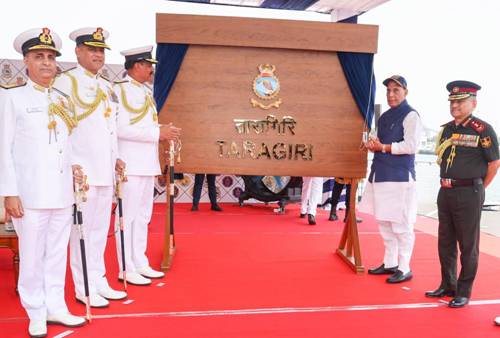
INS Taragiri is part of the Indian Navy’s Project 17A programme, which focuses on building advanced stealth frigates using improved ship design and domestic industrial capability. Mazagon Dock Shipbuilders Limited constructed the vessel using specialised steel supplied by SAIL, demonstrating coordination between India’s defence shipyards and heavy industry.
Special-grade steel plays a critical role in modern naval platforms. It must provide strength, durability and resistance to harsh marine conditions while supporting design requirements associated with stealth and survivability. The ability to produce such materials domestically reduces reliance on imports and strengthens the resilience of defence supply chains.
Contribution To India’s Defence Industrial Base
SAIL has supplied specialised steel for several major naval platforms in recent years. These include the Indigenous Aircraft Carrier INS Vikrant and the first three ships of the Project 17A class: INS Nilgiri, INS Himgiri and INS Udaygiri. Such collaboration reflects a broader policy emphasis on strengthening domestic defence manufacturing capacity.
The development aligns with India’s wider strategy to expand local manufacturing capability across critical sectors. Efforts to strengthen advanced production ecosystems, including initiatives highlighted in India’s push for advanced and additive manufacturing, are intended to support industries ranging from aerospace to defence shipbuilding.
Similarly, national programmes aimed at building indigenous technology capacity—such as those discussed in India’s advancement of indigenous defence technology—seek to strengthen domestic expertise, supply chains and research capabilities across the defence sector.
The commissioning of INS Taragiri therefore represents not only an expansion of naval capability but also a demonstration of how domestic steel production and shipbuilding can contribute to India’s long-term maritime security and industrial development.