India Signs Reform-Based MoUs With Five States Under Jal Jeevan Mission 2.0

India has signed reform-based memoranda of understanding (MoUs) with Gujarat, Haryana, Chhattisgarh, Himachal Pradesh and Goa under Jal Jeevan Mission (JJM) 2.0, reinforcing centre–state collaboration to improve rural drinking water services. The agreements follow Cabinet approval of JJM 2.0 on 10 March 2026 and set out shared commitments to accountability, service quality and community participation. The signings were conducted via video conference in the presence of Union Jal Shakti Minister C R Patil.
According to the official release, the reform framework is intended to strengthen sustainable service delivery, improve transparency and ensure long-term functionality of rural water supply assets across participating states.
Reform-Based Agreements to Strengthen Rural Water Governance
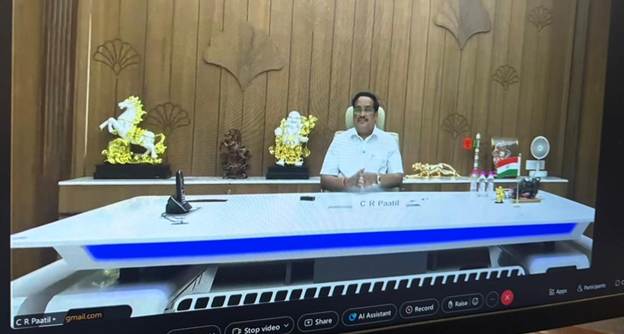
The MoUs formalise state-specific reform commitments covering quality assurance, transparent implementation and community-led operations. Senior officials from the Department of Drinking Water and Sanitation (DDWS) signed the agreements with their state counterparts, with chief ministers and sector ministers joining virtually.
Participating states committed to strengthening institutional arrangements for operations and maintenance, enhancing source sustainability through recharge measures, and adopting service-based delivery models led by gram panchayats. The approach aligns with broader digital government efforts, including technology-enabled monitoring and transparency, supported by expanding rural connectivity such as 4G, 5G and satellite networks.
State Commitments Reflect Diverse Local Challenges
The agreements recognise differing geographic and administrative contexts. Gujarat and Haryana highlighted administrative coordination and technology-driven transparency, while Chhattisgarh focused on extending coverage in remote and tribal districts through multi-village schemes and recharge systems.
Himachal Pradesh underscored the need for context-specific design in hill and cold regions, alongside greater participation of panchayats in managing user charges and local operations. Goa emphasised service reliability and water quality in a coastal setting affected by salinity, alongside strengthening last-mile connectivity.
From Infrastructure Delivery to Service Sustainability
JJM 2.0 positions rural drinking water as a continuous public service rather than a one-time infrastructure programme. The reform-based MoUs mandate regular supply at prescribed quality standards, timely grievance redressal and sustained community ownership through jan bhagidari.
The mission’s extended timeline and enhanced financial provisions through December 2028 aim to embed accountability and performance management across states. This service-oriented model complements India’s wider push for inclusive national systems and institutional capacity-building, similar to approaches outlined in other national digital ecosystem initiatives.
Collectively, the reforms are intended to secure long-term water safety, improve health outcomes and advance the national vision of Viksit Bharat @2047, with rural communities playing a central role in governance and sustainability.