India Launches ‘PRARAMBH 2026’ to Prepare Taxpayers for Income Tax Act, 2025

India’s Ministry of Finance has launched PRARAMBH 2026, a nationwide awareness and outreach campaign to prepare taxpayers and officials for the implementation of the Income Tax Act, 2025, which comes into force on 1 April 2026. Led by Union Finance and Corporate Affairs Minister Nirmala Sitharaman, the initiative combines multimedia communication, digital tools and on-ground engagement to support a simpler, more citizen-focused tax administration. The announcement was made in New Delhi on 20 March 2026, according to an official Press Information Bureau release.
Nationwide outreach for the new tax framework
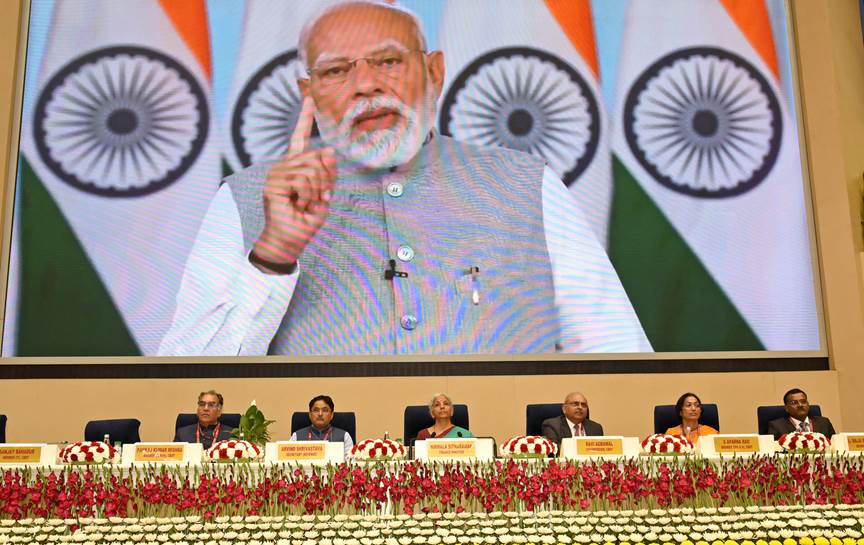
PRARAMBH 2026 has been designed as a multi-platform campaign spanning print, radio, television, outdoor advertising and digital and social media. It is intended to familiarise citizens, businesses and professionals with the structure and key provisions of the new Act, as well as the practical steps required for compliance. The outreach includes guidance notes, tutorial videos, brochures and interactive initiatives such as MyGov quizzes.
To extend its reach, the Central Board of Direct Taxes (CBDT) has issued informational material in English and Hindi, alongside 10 regional languages. Officials said the emphasis is on clear and accessible communication, particularly for first-time and small taxpayers, as well as students and young professionals.
Digital tools and service modernisation
As part of the launch, the finance minister also unveiled Income Tax Website 2.0, an upgraded digital platform intended to improve usability, navigation and service delivery. The website forms part of the department’s broader digital transformation programme, aimed at reducing friction in routine interactions between taxpayers and the administration.
An AI-based chatbot, Kar Sathi, has also been introduced to assist taxpayers with queries related to the new law, associated rules and prescribed forms. The tool is expected to complement existing support channels, including income tax service centres, and reflects a wider government focus on responsible use of artificial intelligence in public services. Similar capacity-building efforts can be seen in initiatives such as AI training programmes for government officials and state-level measures to strengthen digital resilience in public administration.
Focus on implementation and institutional readiness
Revenue Secretary Arvind Srivastava described the Income Tax Act, 2025 as a shift towards a clearer and more user-friendly tax system, noting that implementation will be critical to its success. He highlighted efforts to standardise rules and forms, alongside extensive capacity-building for tax officials to ensure consistent application across the country.
The outreach programme includes more than 300 workshops nationwide, designed not only to disseminate information but also to gather structured feedback from stakeholders. According to the ministry, this approach is intended to make the reform process iterative, allowing issues to be identified and addressed early.
Citizen-centric approach and ethical use of technology
In her address, Sitharaman stressed that tax officials represent the government’s primary interface with citizens and called for a more empathetic, trust-based approach to administration. She argued that technology should be used to minimise unnecessary human intervention while retaining a strong human touch, making compliance easier for honest taxpayers and more effective in addressing deliberate evasion.
The finance minister also referenced the Prime Minister’s M.A.N.A.V. framework for a human-centric digital era, underlining the need for ethical systems, accountable governance and accessible artificial intelligence. Engagement with youth and professionals, including technologists and data scientists, was identified as an important part of sustaining reform, aligning with broader education and skills initiatives such as introducing AI and computational thinking at an early stage.
With PRARAMBH 2026, the Income Tax Department is positioning the coming year as a transition period focused on awareness, preparedness and dialogue. As the new law takes effect from April 2026, the emphasis remains on stability, simplicity and building long-term trust between the state and taxpayers.