India Launches Administrative Capacity Programme For Scientists And Academic Leaders

The Government of India has introduced a new administrative capacity development programme for scientists and educators under the Mission Karmayogi framework. Announced by Minister of State Dr Jitendra Singh during a session of “Sadhana Week” in New Delhi, the initiative aims to equip leaders in research and academic institutions with governance, decision-making and administrative skills. Details of the initiative were outlined in an official government press release, which positions the programme as part of broader civil service reforms focused on continuous learning and citizen-centred governance.
Addressing Administrative Gaps In Scientific And Academic Leadership
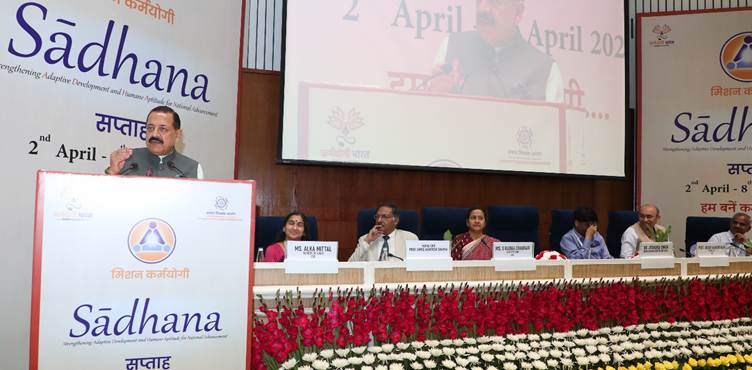
The programme is designed to address a longstanding challenge in India’s research and education ecosystem. Scientists and academics often assume leadership positions in institutions without prior exposure to administrative systems or governance processes. The initiative aims to provide structured training that supports these professionals as they transition into roles requiring organisational management, policy implementation and institutional oversight.
According to the government, the training will help reduce reliance on informal or self-directed learning when researchers move into senior management roles. Instead, participants will gain access to systematic learning modules focused on governance procedures, public administration practices and leadership responsibilities within public institutions.
Mission Karmayogi And Role-Based Governance Reform
The initiative forms part of the broader Mission Karmayogi programme, which seeks to modernise India’s civil services through continuous professional development and digital learning platforms. The minister emphasised that capacity building should move beyond traditional rule-based administrative frameworks towards a role-based approach that enables officials to adapt more easily to changing institutional needs.
This shift reflects wider efforts to strengthen digital-era governance across the country. Similar initiatives supporting integrated public service delivery have been highlighted in programmes such as India’s smart digital governance initiatives, which aim to improve responsiveness and coordination across government agencies.
Dr Singh also encouraged the development of structured modules by the Capacity Building Commission (CBC), including specialised training on responding to parliamentary questions. Such modules are intended to strengthen procedural understanding among officials responsible for legislative and administrative communication.
Digital Platforms And Expanded Capacity Development Tools
Alongside the new programme, the government launched additional initiatives intended to strengthen the capacity development ecosystem. These include the updated Unnati portal and a nationwide rollout plan for the Karmayogi Karyakram, both designed to improve institutional collaboration and access to training resources across government departments.
The approach aligns with wider efforts to scale digital governance systems in India, including platforms that support public service delivery and administrative efficiency such as SAMPANN, which enables large-scale digital service management.
Global Collaboration On Governance And Technology
During the event, the Capacity Building Commission and the Research and Information System for Developing Countries (RIS) signed a memorandum of understanding to strengthen global knowledge partnerships in public sector capability development. The collaboration will facilitate policy dialogue, expert exchanges and thematic learning initiatives across countries.
Areas of focus include artificial intelligence in governance, digital transformation and public sector innovation. These themes are increasingly central to national policy discussions, as reflected in initiatives where India has promoted responsible and inclusive adoption of artificial intelligence in government and public services.
Strengthening Future-Ready Civil Services
Officials described the programme as part of Mission Karmayogi’s five-year evolution towards building a future-ready civil service. The reform agenda emphasises continuous learning, technology adoption and improved service delivery outcomes.
By equipping scientific and academic leaders with governance capabilities, policymakers aim to strengthen institutional performance across research and education sectors while ensuring that administrative reforms translate into measurable improvements in public services.