India Expands Farm Mechanisation Network To Support Climate-Resilient Agriculture

India’s Ministry of Agriculture and Farmers Welfare is expanding access to modern farm machinery as part of a broader strategy to help farmers respond to climate change and rising production risks. The initiative aims to establish village-level networks of custom hiring centres and farm machinery banks so that small and marginal farmers can rent advanced equipment at affordable rates. According to Agriculture and Farmers Welfare and Rural Development Minister Shivraj Singh Chouhan, the approach combines improved crop varieties, scientific recommendations and mechanisation to support more resilient and productive farming systems.
Speaking during an interaction with the media at the Advanced Agriculture Festival, Mr Chouhan said climate variability is already affecting farming conditions across the country. As reported in the official government announcement, the ministry is prioritising technologies and institutional models that allow farmers to adapt to erratic rainfall, temperature fluctuations and other climate-related pressures.
Responding to Climate Change in Agriculture
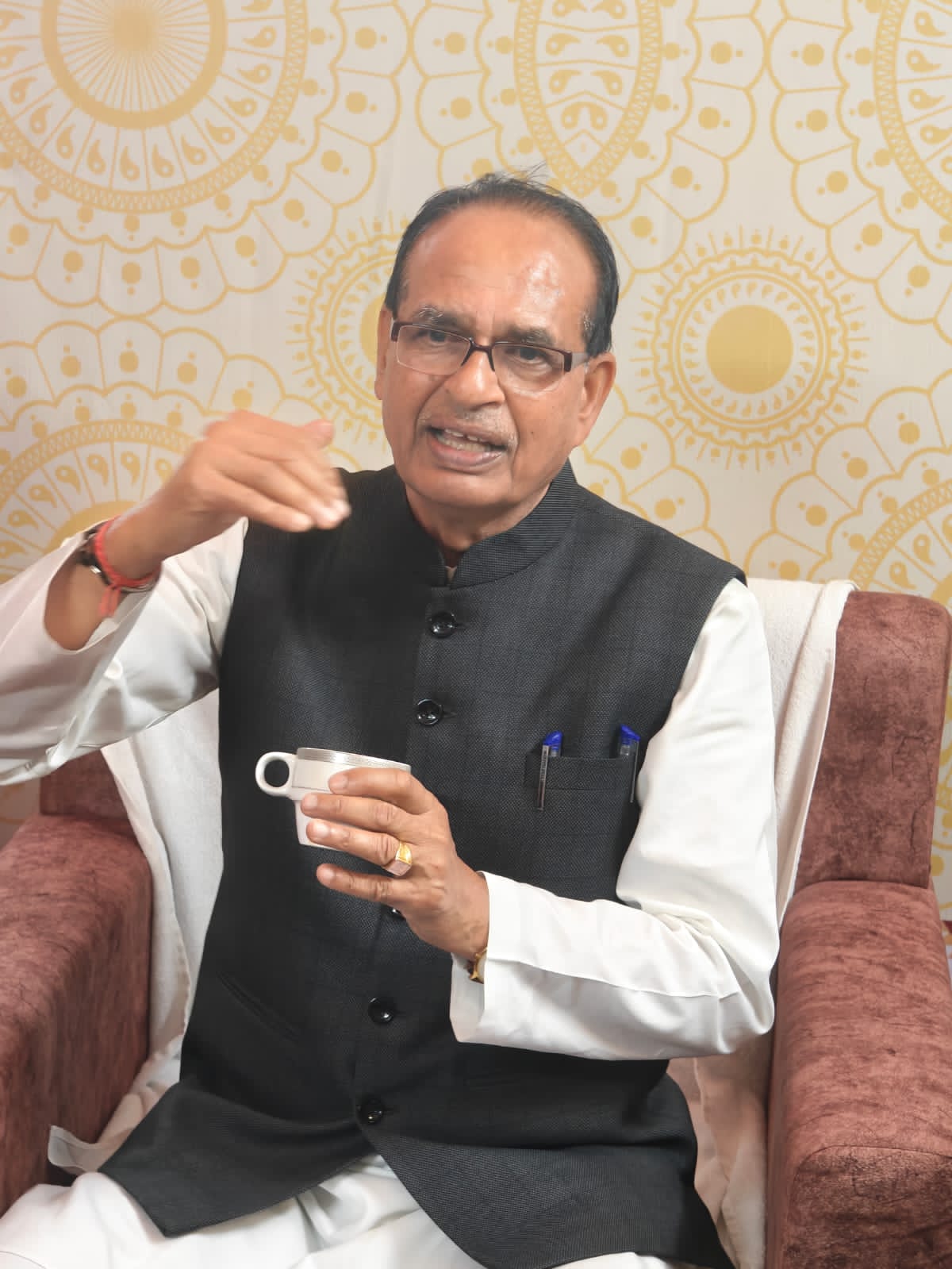
Mr Chouhan noted that climate change has become a prominent concern for Indian agriculture, with unseasonal rainfall, western disturbances and temperature uncertainty affecting crop cycles. Research institutions are therefore developing crop varieties capable of tolerating higher temperatures, excess rainfall and water scarcity. The government is working to accelerate the delivery of these varieties to farmers so that they can maintain yields under changing conditions.
“क्लाइमेट चेंज अब बहुत प्रॉमिनेंट हो चुका है और अनसीज़नल बारिश, वेस्टर्न डिस्टर्बेंस तथा तापमान में अनिश्चितता के कारण खेती पर सीधा असर पड़ रहा है।” — Shivraj Singh Chouhan, Minister of Agriculture and Farmers Welfare, Government of India
Technology is increasingly central to this strategy. Initiatives that integrate climate monitoring, data systems and predictive tools are helping authorities and farmers anticipate weather risks, as explored in efforts to strengthen digital and data systems for climate and forecasting across India.
Custom Hiring Centres Expand Access to Modern Equipment
A key part of the government’s approach is expanding shared access to agricultural machinery. Instead of relying solely on subsidies for individually owned equipment, the ministry is supporting village-level facilities where farmers can rent machines when needed.
These facilities include custom hiring centres and panchayat-based farm machinery banks established through local governments, farmer producer organisations (FPOs), farmer groups and self-help groups. The model aims to make advanced agricultural equipment accessible to small and marginal farmers who may not be able to purchase machinery outright.
Under the Sub-Mission on Agricultural Mechanisation (SMAM), the central government provides financial assistance covering 40 to 80 per cent of project costs. Projects valued at up to around ₹3 million can receive support, helping community organisations and local institutions develop shared machinery services.
Mechanisation is also increasingly linked with digital technologies and satellite-based monitoring that support precision agriculture. Recent initiatives show how space technology is being used to strengthen smart agriculture and disaster resilience, helping farmers manage climate risks more effectively.
Clarifying Funding Mechanisms for Mechanisation Projects
Responding to questions about whether Members of Parliament Local Area Development Scheme (MPLADS) funds could be used to build custom hiring centres, Mr Chouhan clarified that the scheme is intended for permanent community assets such as roads, schools, healthcare facilities and sports infrastructure.
Because custom hiring centres operate as service-based rental models requiring operational management, they are supported through agricultural mechanisation schemes rather than MPLADS funding. The minister said this approach ensures transparency and alignment with the purpose of each funding programme.
Role of Local Representatives and Partnerships
Although MPLADS cannot directly finance the centres, Mr Chouhan emphasised that Members of Parliament and state legislators can still play an important role. By helping farmer groups, panchayats and FPOs submit proposals and by monitoring implementation, elected representatives can support effective delivery of mechanisation schemes.
The government is also exploring collaborative models involving local institutions and private sector participants. In several states, entrepreneurs and companies have already begun operating equipment rental services where there is stable demand and supportive policy frameworks.
Officials suggest that partnerships between FPOs, panchayats and private operators could strengthen service availability while ensuring machines remain operational and accessible to farmers at reasonable costs.
Towards a Farmer-Centred and Climate-Resilient Strategy
Mr Chouhan said the broader objective is to integrate existing agricultural programmes with climate resilience, modern mechanisation and market-oriented planning. By combining improved crop varieties, scientific guidance and accessible machinery services, the government aims to reduce production costs while supporting higher and more stable farm incomes.
Such measures are expected to contribute to a wider transformation of Indian agriculture, where technology-driven approaches — including emerging AI applications highlighted in discussions about India’s AI-driven agricultural transformation — increasingly shape productivity, risk management and rural economic resilience.