Ho Chi Minh City Advances Green Satellite Urban Areas and Transit-Oriented Growth

Ho Chi Minh City is entering a new phase of urban development that shifts growth beyond dense inner districts towards greener, lower-density satellite areas and public transport corridors. Drawing on newly expanded administrative boundaries and diverse natural assets, the city aims to balance economic development with environmental protection and liveability. The approach combines ecological urban planning with transit-oriented development (TOD), as outlined in a report by VietnamPlus.
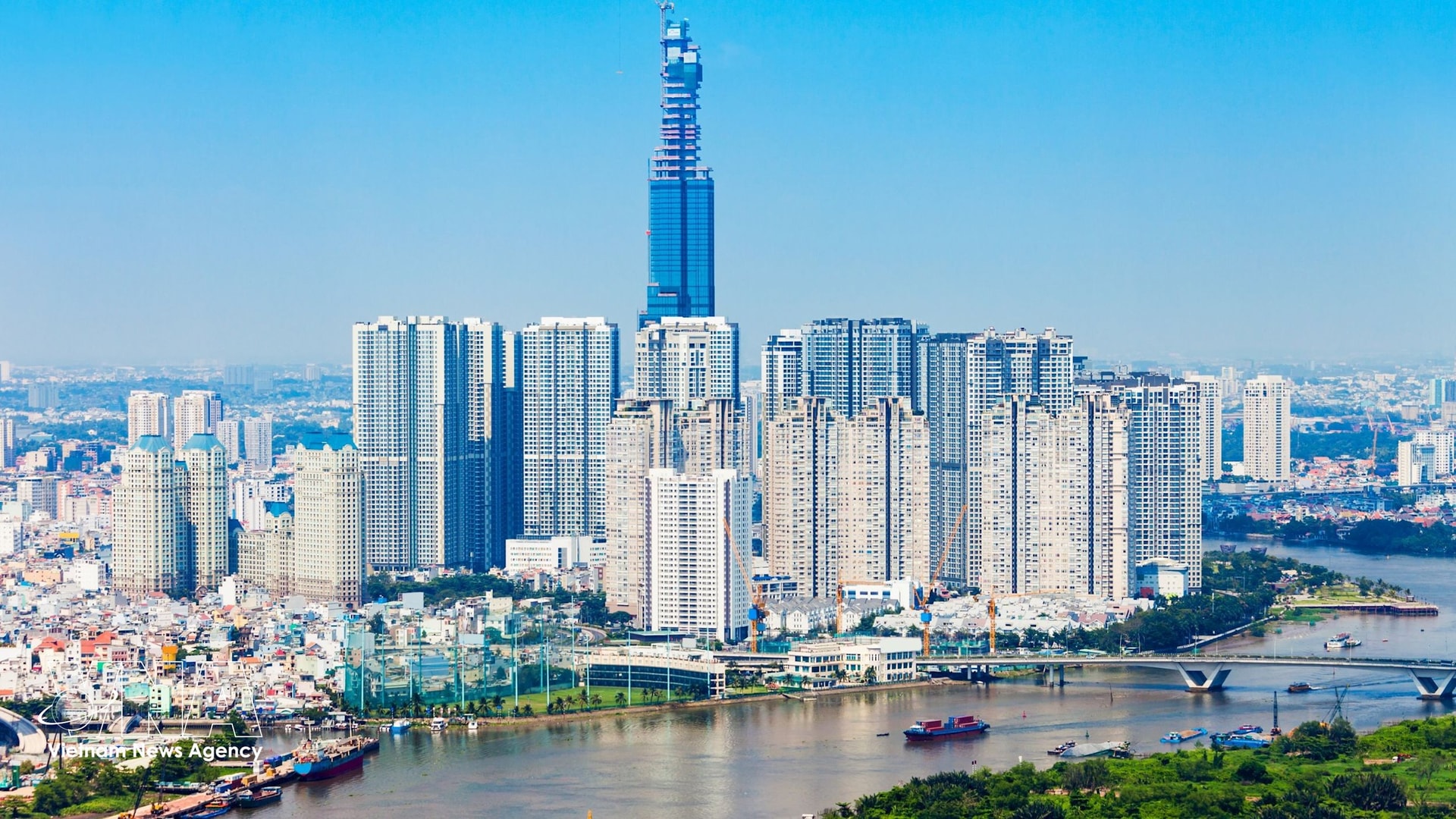
Formerly peripheral districts and communes, including areas from the merged provinces of Binh Duong and Ba Ria – Vung Tau, are now seen as future growth centres. With substantial land reserves and relatively intact ecosystems, these locations are expected to support green urban areas focused on agriculture, tourism, logistics and transport, aligning with wider efforts to modernise infrastructure and sustainability, including initiatives around smart and green ports.
Ecological foundations for satellite urban development
Across the city’s 168 wards, communes and special zones, many areas retain significant natural features such as mangrove forests, primary forests, islands and river systems. Locations including Can Gio, Cu Chi, Con Dao, Long Son and Xuyen Moc provide favourable conditions for developing ecological and smart satellite towns. Local Party congress resolutions for the 2025–2030 term have reinforced ambitions to build greener and more technologically enabled urban areas.
Can Gio commune illustrates this direction. Covering around 157 square kilometres with a population of just over 27,000, the coastal area is home to a mangrove ecosystem recognised by UNESCO. Local plans prioritise forest protection and marine conservation while developing transport infrastructure, housing and clean energy to support a sustainable coastal urban economy, including port-related activities.
Other areas are pursuing tailored development paths. Phuoc Thang ward, formed from former Vung Tau city wards, is focusing on environmentally friendly industrial, trade and service growth alongside social security and defence objectives. Meanwhile, Ho Tram and Xuyen Moc communes are emerging as destinations for eco-tourism, resorts and high-tech agriculture, reflecting a flexible approach that assigns distinct roles to each locality.
Transit-oriented development reshapes urban structure
Alongside green satellite towns, Ho Chi Minh City is promoting TOD to concentrate higher-density development around mass transit. This strategy has gained momentum following the National Assembly’s Resolution 98 in 2023 and Resolution 188 in 2025, which pilot specific mechanisms for urban development and the expansion of the urban railway network.
According to the municipal Department of Planning and Architecture, the city plans to develop 11 high-density TOD zones along metro routes, covering nearly 7,400 hectares. A detailed plan for areas along Metro Line No 2 (Ben Thanh – Tham Luong) was issued in December 2025, with construction breaking ground on 15 January 2026. The line has a total investment of 47.89 trillion Vietnamese dong (VND) and will include 10 stations over more than 11 kilometres.
TOD areas are designed as mixed-use zones within roughly 1,000 metres of metro stations, integrating housing, offices, retail and public services. The model aims to reduce private vehicle use, improve land-use efficiency and lower emissions, while also supporting digital and green transitions linked to broader connectivity initiatives such as Vietnam’s expanding 5G networks.
Towards a multi-centre mega city
With expanded boundaries, Ho Chi Minh City now encompasses multiple transport assets, including metro lines, expressways, ring roads, seaports and rail hubs. Key infrastructure such as the Cai Mep – Thi Vai deep-water port and Song Than railway station strengthens opportunities to develop industrial and high-tech urban zones in the north, alongside port-linked and coastal tourism cities in southern areas.
Urban planners note that the combination of green satellite towns and TOD could help restructure urban space more efficiently while preserving cultural and environmental values. If implemented effectively, the strategy positions Ho Chi Minh City to evolve into a multi-centre, multi-functional mega city that supports long-term sustainability alongside economic growth.