DGCA and Gati Shakti University Partner to Train Aviation Workforce in India

India’s Directorate General of Civil Aviation (DGCA) and Gati Shakti University (GSV) have signed a memorandum of understanding to strengthen training and knowledge exchange across aviation engineering, management, and technical disciplines. The partnership aims to develop skilled professionals for India’s rapidly expanding aviation sector, particularly in maintenance, repair and overhaul (MRO). According to the official announcement, the initiative will also support research collaboration and capacity building to meet growing workforce demand in the industry.
Partnership to Strengthen Aviation Skills and Training
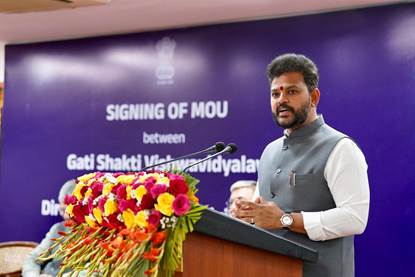
The agreement was signed by DGCA Director General Faiz Ahmed Kidwai and GSV Vice Chancellor Prof Manoj Choudhary in the presence of Civil Aviation Minister Kinjarapu Ram Mohan Naidu and Minister for Railways, Information and Broadcasting, and Electronics and Information Technology Ashwini Vaishnaw.
The collaboration focuses on building industry–academic connections to support workforce development for aviation and MRO operations. Under the arrangement, a new undergraduate programme in Aviation Maintenance Engineering (AME) will be introduced, beginning in the 2026–27 academic year from August 2026.
“गति शक्ति और डीजीसीए के बीच हुए इस ऐतिहासिक समझौता ज्ञापन (एमओयू) पर, मैं सबसे पहले दोनों संस्थानों को बधाई देना चाहूंगा, क्योंकि यह उन सबसे महत्वपूर्ण समझौतों में से एक की नींव है, जो भविष्य के लिए हम जिस कार्यबल तैयार करने की कोशिश कर रहे हैं, उसके संदर्भ में पूरे विमानन क्षेत्र को परिवर्तित करने वाला है।” — Kinjarapu Ram Mohan Naidu, Civil Aviation Minister, Government of India
Developing Capacity for a Growing Aviation Market
India’s aviation sector is experiencing sustained growth, with aircraft orders expected to significantly expand the country’s fleet over the coming decade. Government estimates cited during the announcement indicate that airlines have placed orders for around 1,700 aircraft, roughly doubling the current fleet size. By 2036, the number of aircraft operating in Indian airspace could reach about 3,000.
This expansion will require a substantial increase in skilled personnel. Officials estimate that between 10,000 and 12,000 pilots may be needed over the next decade, alongside a larger workforce of engineers and maintenance specialists to support aircraft operations.
The initiative reflects broader national efforts to strengthen technical education and workforce readiness. Similar programmes, such as initiatives highlighted in training programmes launched to upskill the job force, demonstrate the government’s focus on aligning education with industry demand.
Focus on MRO Capability and Aviation Manufacturing
Policy attention is also centred on strengthening India’s aviation manufacturing and maintenance ecosystem. According to the civil aviation minister, the number of MRO facilities in the country has grown from around 160 to more than 240 in the past five years.
Through the new partnership, Gati Shakti University will collaborate with DGCA on research and knowledge exchange in areas including sustainable aviation fuel, aircraft maintenance, component manufacturing, and systems integration. The university is also expected to support capacity building and training for DGCA officials.
The collaboration is designed to bridge regulatory frameworks, academic institutions, and industry needs. While DGCA will continue to oversee licensing standards under the CAR-66 and CAR-147 regulatory structures, GSV will focus on curriculum development, instructor training, and industry-linked apprenticeship models.
These efforts align with wider government initiatives to strengthen education and skills infrastructure across the country, including programmes expanding technical and digital learning opportunities such as the establishment of new NIELIT centres to broaden digital education access.
By integrating simulation labs, MRO training, partnerships with original equipment manufacturers, and competency-based learning pathways, the DGCA–GSV initiative aims to prepare a workforce capable of supporting India’s expanding aviation fleet while strengthening the country’s position in global aircraft maintenance and manufacturing.