Australia and United States Expand Cooperation on Critical Minerals Supply Chains

Australia and the United States have stepped up cooperation to strengthen global supply chains for critical minerals and rare earths, announcing new funding commitments and coordination mechanisms at a ministerial meeting in Tokyo. The initiative aims to support defence, manufacturing and energy industries while improving supply resilience. Details of the collaboration were outlined during the inaugural Mining, Minerals and Metals Investment Ministerial on 14 March 2026, with both governments confirming substantial financing and new policy coordination to accelerate project development.
The discussions formed part of the United States–Australia Framework for Securing Supply in the Mining and Processing of Critical Minerals and Rare Earths, agreed by Prime Minister Anthony Albanese and US President Donald J Trump in October 2025. The framework focuses on diversifying supply chains and reducing vulnerabilities in minerals that underpin advanced manufacturing, defence technologies and energy systems.
Ministerial meeting advances bilateral minerals framework
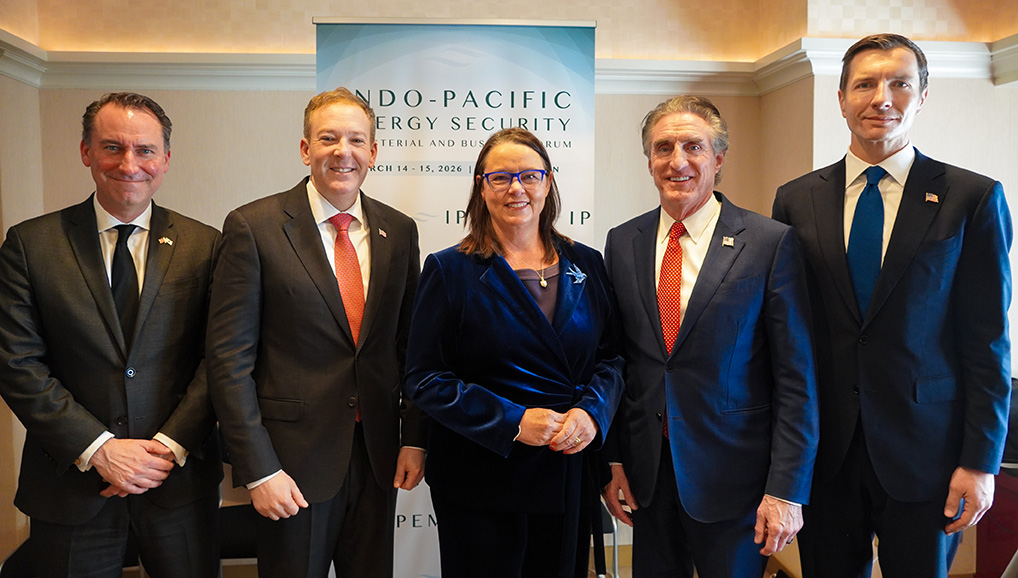
The ministerial brought together Australia’s Minister for Resources and Northern Australia Madeleine King and senior representatives from several US agencies, including the Department of the Interior, the Environmental Protection Agency, the Export-Import Bank and the Department of Energy. The meeting focused on operationalising the bilateral framework and coordinating public and private investment in strategic mineral projects.
Within six months of agreeing the framework, both governments confirmed that they had each taken steps to mobilise at least US$1 billion in financing for critical minerals projects. These investments are intended to support the development of a more resilient industrial base and secure long-term supply for key sectors, including defence manufacturing and energy technologies.
New coordination group to address supply chain risks
A central outcome of the meeting was the creation of a Critical Minerals Supply Security Response Group. The group will be led by senior officials from the US Department of Energy and Australia’s Department of Industry, Science and Resources, with a mandate to monitor supply chain vulnerabilities and coordinate responses.
The group will focus on priority minerals and support faster delivery of processed materials through the bilateral framework. Cooperation will also extend to regulatory coordination, information sharing and investment tools designed to stabilise supply during periods of disruption.
Both governments also plan to align policy and financial mechanisms, including collaboration between Australia’s Critical Minerals Facility and Strategic Reserve and financing initiatives such as the US Export-Import Bank and Project Vault.
Funding directed to strategic mining and processing projects
The Australian and US governments have already announced support for a range of projects intended to expand and diversify supply chains. Together, these commitments total around US$2.2 billion from the United States and approximately US$1.4 billion from Australia.
Projects receiving backing include initiatives focused on gallium recovery, rare earths processing, nickel production, tungsten mining and magnesium development. Additional proposals involving minerals such as vanadium and scandium have also received indicative government support.
These developments reflect broader efforts by Australia to strengthen the technological and industrial capabilities associated with its resources sector. Initiatives such as programmes where universities are embedding advanced technologies in mining operations are already underway, including efforts highlighted in research programmes integrating digital technologies into mining. At the same time, national innovation strategies emphasise the role of emerging technologies such as AI, quantum computing and robotics in future economic growth, which rely heavily on secure supplies of critical minerals.
The ministerial concluded with agreement on a forward workplan covering areas such as mineral resource mapping, permitting reforms, protection against non‑market trade practices and improved recovery of minerals from waste streams. Officials from both countries are expected to reconvene within the next 12 months to review progress and coordinate further investment and policy actions.