
India has opened a new assistive device production facility in Faridabad, Haryana, aimed at strengthening domestic manufacturing of technologies for persons with disabilities. The Auxiliary Production Center, developed by the Artificial Limbs Manufacturing Corporation of India (ELIMCO), includes a Surface Mount Technology (SMT) chip manufacturing unit intended to reduce reliance on imported components. According to the official government announcement, the facility will support the production of advanced assistive devices using technologies such as 3D printing and locally manufactured electronics.
New Production Facility for Assistive Technologies
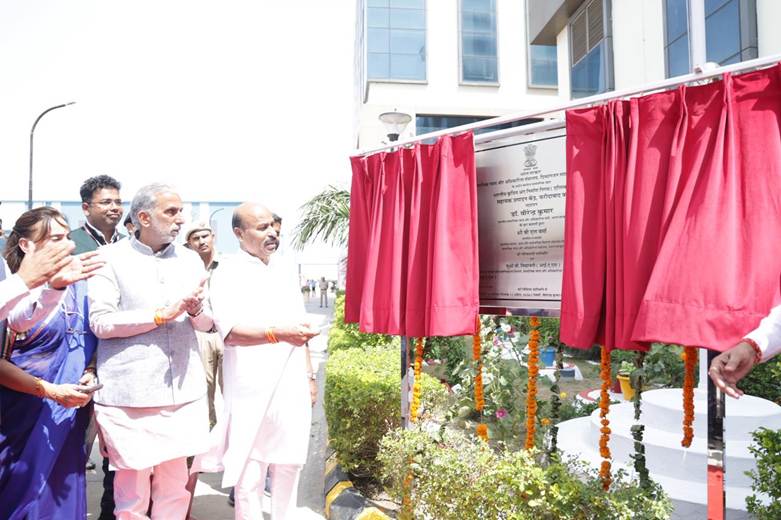
The facility was inaugurated by Dr Virendra Kumar, Union Minister for Social Justice and Empowerment, in the presence of Krishan Pal Gurjar, Minister of State for Cooperation, and senior officials from the Department of Empowerment of Persons with Disabilities. The centre forms part of wider efforts to strengthen local manufacturing capacity and support innovation in assistive technologies.
Officials inspected the new production lines, including the SMT chip manufacturing unit designed to support electronic components used in assistive devices. Domestic chip manufacturing for these applications is expected to help lower import dependence while supporting India’s broader push towards advanced electronics production. These developments align with wider national initiatives encouraging smart manufacturing in semiconductors and electronics.
Supporting Independence for Persons with Disabilities
“यह केंद्र केवल एक विनिर्माण इकाई नहीं है, बल्कि दिव्यांगजनों के सम्मान और स्वावलंबन का एक सशक्त माध्यम है।” — Dr Virendra Kumar, Minister for Social Justice and Empowerment, Government of India
Dr Kumar noted that technologies such as 3D printing and domestically produced SMT chips will enable India to produce assistive devices that meet international standards while being tailored to local needs. He added that the Faridabad centre could improve access to mobility and rehabilitation technologies for people across Haryana and northern India.
The initiative also reflects broader national priorities to expand advanced manufacturing capabilities. Efforts to strengthen additive and digital production technologies have been highlighted in recent initiatives supporting advanced and additive manufacturing in India, particularly in sectors where customisation and precision engineering are essential.
Administrative Support and Sector Growth
Krishan Pal Gurjar emphasised the role of administrative reforms and improved operational efficiency in expanding the department’s programmes. According to him, increased budget allocations and improved management practices have accelerated development initiatives aimed at supporting persons with disabilities.
ELIMCO Chairman and Managing Director Praveen Kumar said the organisation is adopting modern manufacturing processes and a renewed work culture to strengthen domestic production capacity. He noted that increased policy support and institutional guidance have enabled the organisation to expand services and develop more advanced assistive technologies.
Distribution of Assistive Devices
During the event, assistive devices were distributed to beneficiaries, including motorised tricycles, modern wheelchairs and other prosthetic aids. These technologies are designed to improve mobility, independence and participation in social and economic life.
The Faridabad centre is expected to expand production capacity and support the development of more sophisticated assistive devices. By integrating electronics manufacturing with rehabilitation technologies, the facility represents a step towards strengthening India’s domestic innovation ecosystem while advancing inclusive access to technology.