Thailand Launches SRI Alert Platform to Strengthen National Disaster Early Warning

Thailand’s science and innovation agencies have launched a new digital platform designed to strengthen national disaster preparedness and response. The SRI Alert (Sri Alert) system integrates research data, expert knowledge and digital technologies to support decision-making by public authorities. Announced on 30 March 2026 by the Science, Research and Innovation Promotion Fund, the initiative brings together universities, research centres and government agencies to improve early warning systems and translate scientific research into operational disaster management tools.
The initiative was unveiled at a press event in Bangkok led by Prof Dr Sompong Klaisubungruang, Director of the Thailand Science Research and Innovation (TSRI). According to the official announcement published by the Ministry of Higher Education, Science, Research and Innovation, the platform aims to integrate national research outputs into a practical system that can support disaster management and recovery following recent seismic events affecting Bangkok and surrounding areas (see the official announcement). The platform forms part of wider efforts to use technology and data to strengthen public-sector resilience, reflecting broader national initiatives to advance technology and data for sustainable development.
Integrating Research and Technology for Disaster Management
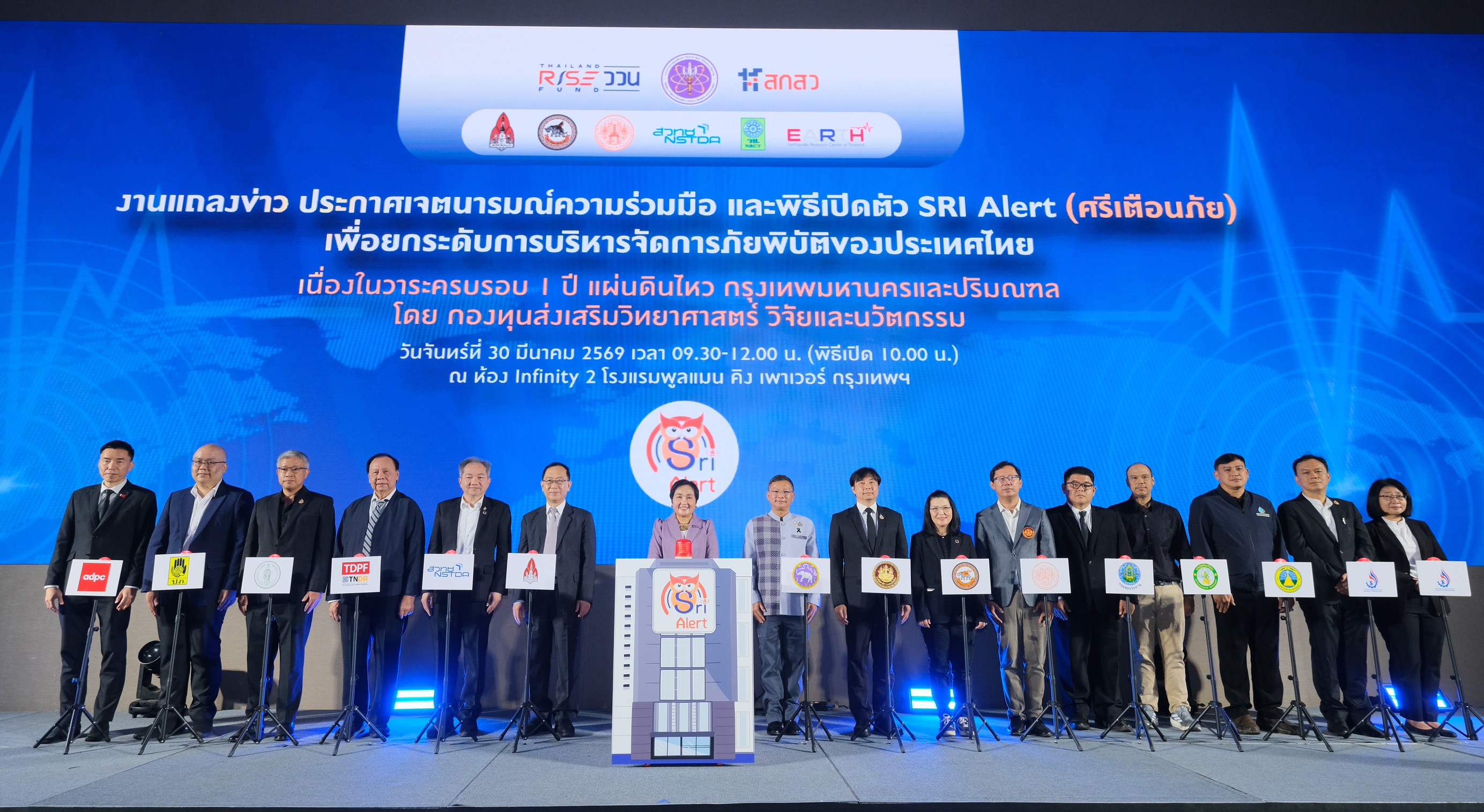
SRI Alert functions as a central platform that connects data, research expertise and technological tools related to disasters. The system brings together spatial information, engineering research, environmental data, cloud infrastructure and artificial intelligence to support situational awareness and informed decision-making by government agencies.
The platform also aims to strengthen collaboration between research institutions and operational agencies. By linking networks of experts and research outputs, policymakers can access verified scientific analysis when responding to emergencies. The approach reflects Thailand’s broader efforts to connect research and digital innovation with public services, including initiatives highlighted in AI and digital innovation programmes supporting equitable welfare.
University Partnerships and Early Warning Capabilities
The platform is being developed through collaboration among multiple universities and research organisations working on disaster-related research. Initial partners include Khon Kaen University, Naresuan University, the National Science and Technology Development Agency (NSTDA), King Mongkut’s Institute of Technology Ladkrabang, the Structural Engineers Association of Thailand and the National Earthquake Research Centre.
According to researchers from Khon Kaen University, the system is primarily designed for organisations responsible for public safety, such as municipalities, provinces, industrial facilities and residential complexes. These organisations can connect their existing communication channels, including messaging platforms, to receive real-time alerts relevant to their location and stakeholders.
Digital Twins and Data Modelling for Urban Risk Management
Research from Naresuan University is contributing an Urban Information Modelling (UIM) system that creates digital twins of urban environments. The technology integrates infrastructure data with three-dimensional models to simulate risks such as flooding, earthquakes and PM2.5 pollution.
Beyond visualising buildings, the system functions as a comprehensive urban database that enables risk mapping, early warning alerts and evacuation simulations. Pilot projects have been implemented with Vajira Hospital, Naresuan University and Tha Pho Municipality in Phitsanulok to develop data-driven evacuation planning for urban authorities and building operators.
AI, IoT and Citizen Reporting in Disaster Response
Researchers from King Mongkut’s Institute of Technology Ladkrabang are also developing an integrated disaster management system that combines artificial intelligence, Internet of Things sensors and big data analytics. The end-to-end platform supports both pre-disaster preparedness and post-disaster response, with SRI Alert acting as the central integration layer.
The system is linked with the Traffy Fondue platform developed by NSTDA, enabling citizens to report incidents and hazards directly. Through this mechanism, public reports become real-time data inputs, helping authorities identify risks and issue alerts based on geographic location.
Lessons From Earthquake Impacts in Bangkok
Research from the National Earthquake Research Centre has highlighted how soil conditions in Bangkok can amplify seismic waves, increasing structural movement during earthquakes even when the epicentre lies outside Thailand. Assessments following the 2025 earthquake used the building safety classification system of the Department of Public Works and Town and Country Planning, marking buildings with green, yellow or red indicators depending on their structural condition.
Engineers are also exploring technologies to reduce seismic impacts, including vibration damping systems in buildings and structural health monitoring using MEMS acceleration sensors that track building behaviour in real time.
“ความไม่รู้นำมาซึ่งความโกลาหล และความโกลาหลนำมาซึ่งความสูญเสีย” — Prof Dr Amorn Pimanmas, President, Structural Engineers Association of Thailand
According to the association, the 2025 earthquake caused economic losses estimated at more than THB 20 billion and triggered widespread traffic disruption in Bangkok as buildings were evacuated and roads temporarily closed.
By integrating early warning technologies, structural monitoring and citizen reporting into a single digital ecosystem, the SRI Alert initiative aims to support faster and more coordinated responses to natural hazards. Participating agencies view the platform as a step towards a nationwide intelligent early warning system that strengthens preparedness and reduces long-term risks.