
India’s central government has convened a high-level roundtable to accelerate the expansion of piped natural gas (PNG) networks across urban areas while safeguarding the continuity of essential services. The meeting brought together ministers, state officials, city administrators and industry representatives to address regulatory and operational barriers to network expansion. According to an official government statement, participants reviewed progress and discussed reforms aimed at supporting a target of five million new PNG connections in cities.
The roundtable was held at Vigyan Bhavan and involved the Ministry of Housing and Urban Affairs (MoHUA), the Ministry of Petroleum and Natural Gas (MoPNG), and the Ministry of Consumer Affairs, Food and Public Distribution. Senior government officials, state ministers, municipal commissioners, and representatives from GAIL, Indian Oil and city gas distribution (CGD) companies also participated.
Focus on Urban Energy Demand and Service Reliability
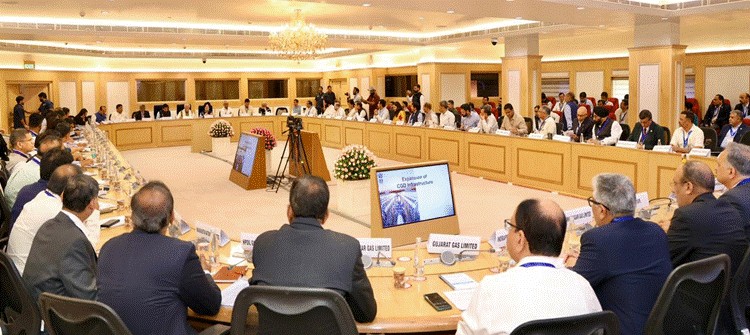
The Secretary of the Ministry of Housing and Urban Affairs highlighted growing urban energy demand and the need to expand access to cleaner fuels while maintaining reliable service delivery. A presentation by the Ministry of Petroleum and Natural Gas reviewed current PNG network expansion efforts and outlined advantages compared with liquefied petroleum gas (LPG), including safety, reliability, affordability and environmental considerations.
However, the discussion also identified several implementation challenges. Delays in municipal permissions, right-of-way approvals and high road restoration charges were cited as key factors slowing the deployment of urban gas infrastructure.
Government Calls for Faster Approvals and Infrastructure Integration
Union Minister for Housing and Urban Affairs Manohar Lal emphasised the role of cities as drivers of economic growth and called for a mission-mode approach to accelerate PNG expansion. He highlighted several priorities, including institutionalising single-window approval systems, integrating gas infrastructure into urban planning processes and improving last-mile connectivity for households and public institutions.
The minister also pointed to the government’s target of providing five million new PNG connections. Achieving this, he noted, will require coordinated action between national ministries, state governments and urban local bodies.
Energy Security and Consumer Protection Considerations
Petroleum and Natural Gas Minister Hardeep Singh Puri discussed shifts in the global energy landscape and stressed the importance of strengthening PNG infrastructure to support energy security and simplify fuel access in cities. States and urban local bodies were encouraged to promote PNG adoption, particularly in areas where infrastructure is already available.
Consumer Affairs Minister Pralhad Joshi highlighted the need to ensure uninterrupted supply of essential commodities while preventing misinformation and fuel black marketing. He advised states to strengthen monitoring and vigilance mechanisms and encourage consumers to transition from LPG to PNG where feasible, prioritising public institutions such as schools and colleges.
States and Cities Highlight Implementation Challenges
State representatives shared operational experiences and emphasised the importance of coordination between urban development departments, municipal bodies and food and civil supplies departments. Several best practices were discussed, including faster road-cutting permissions and the adoption of deemed approval mechanisms to reduce administrative delays.
Participants also raised concerns about high road restoration charges and lengthy procedures that can slow infrastructure deployment. There was broad agreement that rationalising such charges and introducing time-bound single-window approval systems could help accelerate network expansion.
Structured Action Plan for City-Level Implementation
Following the roundtable, a separate working session was held between CGD entities and municipal commissioners to address city-specific issues. Participants identified project bottlenecks and pending approvals affecting PNG rollout in different locations.
The meeting concluded with agreement on a structured action plan with defined timelines. Local task forces will be established and monitoring mechanisms introduced to track progress and ensure accountability. The approach reflects a broader shift towards coordinated, data-informed public administration similar to initiatives highlighted in India’s expanding digital governance frameworks, which aim to improve service delivery across sectors.
Officials noted that expanding urban energy infrastructure requires close collaboration between central ministries, states and local governments. As India continues to modernise public services and infrastructure — alongside wider efforts such as strengthening national digital resilience — the PNG initiative is intended to support cleaner urban energy access while maintaining reliable essential services.