Singapore Collaboration Develops UNITED 2.0 Precision Cancer Profiling Test

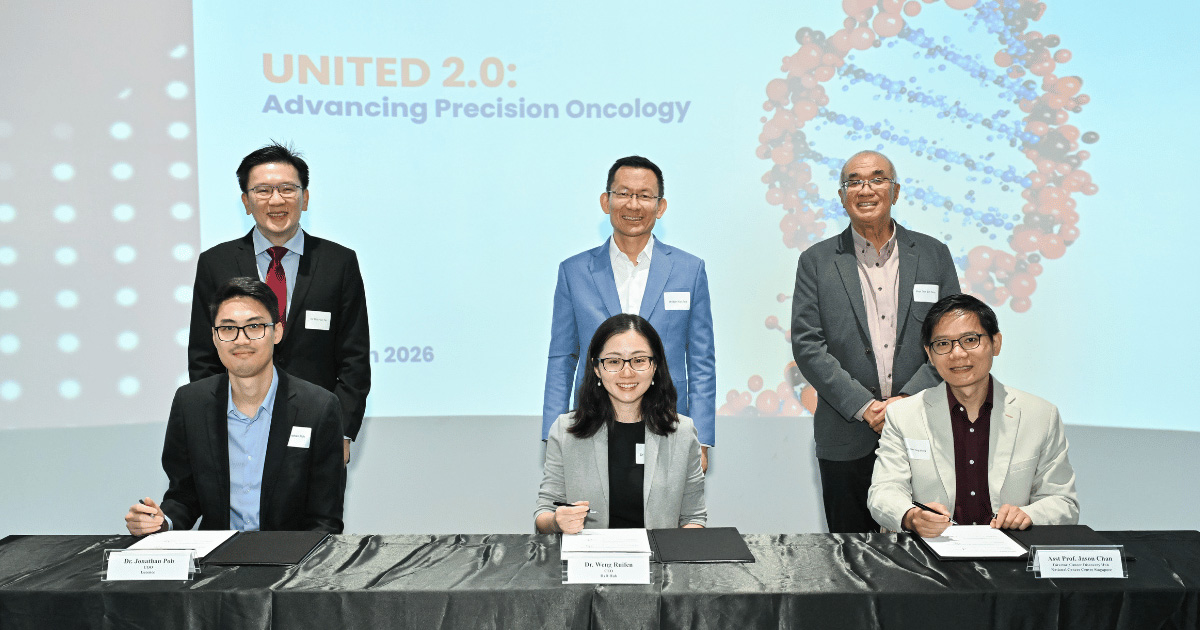
A new S$6 million research collaboration in Singapore aims to advance precision oncology through the development of a next-generation cancer profiling test. Precision health company Lucence is working with the Diagnostics Development Hub (DxD Hub), hosted by the Agency for Science, Technology and Research (A*STAR), and the National Cancer Centre Singapore (NCCS) to develop UNITED 2.0. The initiative builds on an earlier diagnostic platform and seeks to combine advanced genomic sequencing and artificial intelligence to support more detailed tumour analysis and improved clinical decision-making. Details of the collaboration were announced in an official statement from A*STAR.
Advancing Precision Diagnostics Through Expanded Genomic Sequencing
The UNITED 2.0 programme builds on the earlier UNITED 1.0 tissue test, known as UNITED™ 600, which has been used since 2021 to guide therapeutic selection for cancer patients in the region. The earlier assay analyses tumour and tissue samples for 572 genes and 71 RNA fusions by combining DNA and RNA signals.
The updated platform will move beyond targeted gene panels by adopting a dual Whole Exome Sequencing (WES) and Whole Transcriptome Sequencing (WTS) approach. This broader genomic analysis is intended to provide a more comprehensive understanding of tumour biology, enabling clinicians to detect complex mutations and gene fusions that may be linked to targeted therapies.
The development reflects Singapore’s wider push to integrate advanced digital technologies into healthcare and research ecosystems, an approach also explored in initiatives focused on digital and AI-enabled healthcare innovation.
Integrating Artificial Intelligence Into Clinical Genomics
UNITED 2.0 will incorporate artificial intelligence tools to support the interpretation and reporting of large genomic datasets generated by advanced sequencing technologies. By automating parts of the analytical workflow, researchers aim to translate complex genomic information into clinically actionable insights more efficiently.
“UNITED 2.0 moves us from a ‘snapshot’ to a high-definition map of a patient’s cancer,” — Dr Tan Min-Han, Founding CEO and Medical Director, Lucence
Dr Tan added that integrating AI with comprehensive DNA and RNA sequencing can transform large volumes of genomic data into clearer guidance for treatment decisions.
“Clinical diagnostics only creates value when it performs reliably in real-world settings and fits into routine care,” — Dr Weng Ruifen, Chief Executive Officer, DxD Hub
Dr Weng said the collaboration will focus on strengthening the full diagnostic development process, including sample handling, analytical validation and clinical reporting, to support reliable clinical adoption.
Applications Across Multiple Cancer Types
The clinical-grade test under development is expected to support tumour profiling across a wide range of cancers, including breast, lung, colon, bladder, central nervous system tumours and lymphoma. Researchers also plan to develop tools to monitor patients after treatment.
One focus area is Minimal Residual Disease (MRD) testing, which aims to detect small traces of cancer that remain after treatment. Earlier detection of recurrence may allow clinicians to intervene sooner and adjust treatment strategies accordingly.
These developments align with broader national research efforts integrating genomics and artificial intelligence, such as programmes exploring how AI and genomics can support precision cancer diagnostics.
Embedding Patient Perspectives in Diagnostic Innovation
Alongside the technical research, Lucence, DxD Hub and the Brain Tumour Society Singapore (BTSS) signed a Memorandum of Understanding to incorporate patient perspectives into the research and development process. The agreement aims to ensure that future diagnostic tools reflect patient needs and experiences more directly.
“A precise diagnosis is the foundation of the patient journey, but the process is often ‘hidden’ from the patient,” — Melissa Lim, President, Brain Tumour Society Singapore
The three-year UNITED 2.0 collaboration aims to translate research findings into clinical applications while maintaining patient-centred design in the development of diagnostic technologies.