India Explores Use of Foundry Waste Sand for Sustainable Road Construction

India is exploring new ways to convert industrial waste into infrastructure resources, with researchers examining how waste foundry sand can be reused in road construction. A collaborative research initiative involving the Council of Scientific and Industrial Research–Central Road Research Institute (CSIR‑CRRI), the Institute of Indian Foundrymen (IIF) and Suyog Elements India Pvt Ltd aims to develop scientific methods to incorporate this industrial by‑product into road infrastructure. The project supports national priorities on sustainable development, resource efficiency and circular economy practices.
The partnership was formalised through a collaborative research and development agreement signed at the CSIR Science Centre in New Delhi. The initiative, announced by India’s Ministry of Science and Technology, seeks to develop scalable solutions for using waste foundry sand generated by the Coimbatore foundry cluster in road construction. Details of the collaboration were outlined in an official government release available via the Press Information Bureau.
Research Collaboration to Advance Circular Infrastructure
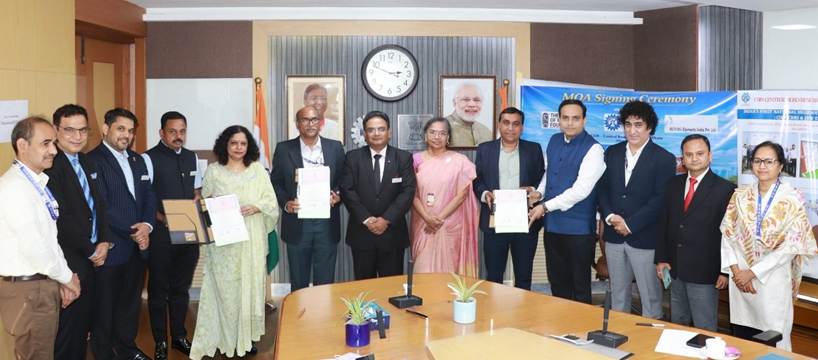
The agreement was signed in the presence of Dr N Kalaiselvi, Secretary of the Department of Scientific and Industrial Research (DSIR) and Director General of the Council of Scientific and Industrial Research. The collaboration focuses on converting waste from metal casting operations into useful materials for transport infrastructure.
Waste foundry sand is a by‑product of the metal casting industry and is produced in large quantities during manufacturing processes. Disposal of this material can create environmental and land‑use challenges. Reusing it in road construction could reduce waste volumes while decreasing reliance on natural aggregates traditionally used in pavement layers.
Structured Research Programme on Foundry Sand Applications
The project will establish a structured research programme to assess different types of foundry sand, including green sand and resin‑bonded sand. Researchers will analyse their engineering properties and develop processing and application protocols suitable for road construction.
CSIR‑CRRI will lead the scientific assessment and validation of the materials, while the Institute of Indian Foundrymen will facilitate industry engagement and knowledge sharing across the sector. Suyog Elements will support implementation and scaling of the technologies developed through the research programme.
The work builds on CSIR‑CRRI’s experience with steel slag road technology, which demonstrated how industrial by‑products can be converted into durable road materials. The research institute has been central to advancing sustainable road technologies in India and continues to collaborate with industry and academia to develop practical solutions. Similar innovation-driven collaborations are also being pursued across the country, including initiatives highlighted in research programmes led by IIT Delhi.
Addressing Waste Challenges in the Foundry Sector
The Coimbatore foundry cluster is among the largest in India, comprising approximately 800 to 1,000 foundry units that supply cast components to domestic industries and export markets. The concentration of manufacturing activity also results in significant volumes of waste foundry sand, creating challenges for disposal and environmental management.
By enabling scientific reuse of this material in road construction, the project aims to transform a disposal challenge into a productive infrastructure resource. If successful, the approach could help reduce industrial waste while supporting the development of greener road infrastructure.
The initiative aligns with broader national efforts to strengthen research‑industry collaboration and promote sustainable technologies. These efforts complement wider innovation strategies across the country, including programmes building advanced technology capabilities and data‑driven infrastructure as explored in India’s emerging national AI ecosystem and the development of AI and data centre capacity supporting the digital economy.
Officials involved in the collaboration say the research could provide a replicable model for integrating industrial by‑products into infrastructure projects, helping advance India’s circular economy objectives while improving resource efficiency in the construction sector.