Sri Lankan Parliamentary Delegation Studies India’s Rural Water And Sanitation Missions
A parliamentary delegation from Sri Lanka has visited India to study the implementation of two major rural development programmes: the Jal Jeevan Mission (JJM) and the Swachh Bharat Mission–Gramin (SBM‑G). The visit forms part of a week‑long study tour aimed at understanding how India has expanded rural drinking water access and sanitation coverage. According to an official statement, the delegation met officials from India’s Department of Drinking Water and Sanitation (DDWS) to review programme design, governance structures and technology use in service delivery.
The delegation from the Parliament of Sri Lanka’s Sectoral Oversight Committee on Infrastructure and Strategic Development was led by MP S M Marikkar. Officials from the Ministry of Jal Shakti outlined how India’s rural water and sanitation initiatives have been implemented through decentralised governance, community participation and digital monitoring tools.
India’s Community‑Led Model For Rural Water And Sanitation
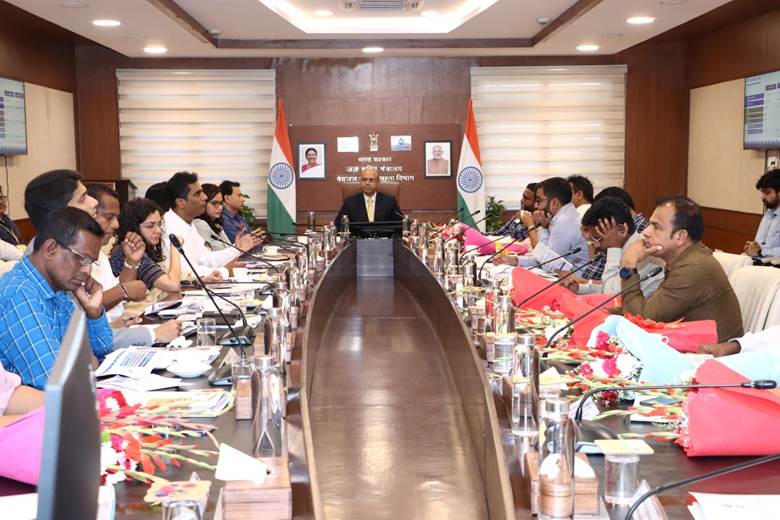
Ashok K K Meena, Secretary of the Department of Drinking Water and Sanitation, explained that India’s national programmes are designed to be implemented through state governments and local institutions, particularly Gram Panchayats. This approach allows communities to manage services directly and ensures that water supply and sanitation infrastructure respond to local needs.
Officials highlighted several operational lessons from implementing the two missions. These include decentralised governance through village councils, stronger coordination between departments at the local level and the use of mobile applications for monitoring, transparency and grievance redress. Technology‑enabled data systems are increasingly being used to track service delivery, reflecting broader trends in India’s digital approach to water governance, such as initiatives described in India’s digital innovation and GIS‑enabled water management programmes.
Progress And Expansion Of The Jal Jeevan Mission
The Jal Jeevan Mission, launched in 2019, aims to provide every rural household with a functional tap water connection. The initiative was announced by Prime Minister Narendra Modi on 15 August 2019 and focuses on delivering safe drinking water directly to homes in rural areas.
The programme initially began with a budget of around US$55 billion, which has since expanded to approximately US$92 billion. Rural tap water coverage has increased significantly, rising from about 17 per cent of households to roughly 82 per cent. More than 150 million rural households now have tap water connections.
India has also approved an extended phase of the programme, known as JJM 2.0, which was cleared by the Union Cabinet on 10 March 2026 and will run until December 2028. The next phase emphasises long‑term operational sustainability, citizen‑focused water quality management and digital data systems, including the Sujalam Bharat National Asset Registry. Similar digital monitoring approaches are increasingly being applied across water infrastructure projects, including initiatives using AI and GIS visualisation tools to strengthen dam safety.
Sanitation Gains Under Swachh Bharat Mission–Gramin
Officials also briefed the delegation on the progress of the Swachh Bharat Mission–Gramin, which was launched in October 2014 to eliminate open defecation in rural India. By 2 October 2019, coinciding with the 150th anniversary of Mahatma Gandhi’s birth, all districts and villages across the country had declared themselves open defecation free.
The programme’s first phase focused on expanding sanitation access, while the second phase aims to sustain open defecation‑free outcomes and strengthen waste management. The mission has led to the construction of more than 120 million individual household toilets and over 272,000 community sanitation complexes nationwide.
Current priorities include managing solid and liquid waste, building community sanitation infrastructure for migrant and landless populations and strengthening behaviour change through information and education campaigns. Eligible households can receive financial incentives of INR 12,000 to construct individual toilets, with priority given to vulnerable groups.
Opportunities For India–Sri Lanka Cooperation
During the discussion session, members of the Sri Lankan delegation highlighted challenges affecting water resources in their country, including contamination from heavy metals such as mercury. These pollutants pose risks to public health and increase the cost of water treatment.
Delegates noted that treated drinking water in Sri Lanka is often used for multiple household purposes beyond consumption, which raises operational costs because water treated to potable standards is also used for washing and cleaning. They emphasised the need for cost‑effective treatment technologies and collaborative innovation to address contamination and resource management challenges.
Officials from India concluded the session by highlighting the value of knowledge exchange and bilateral cooperation in improving water management and sanitation systems. The visit provided an opportunity for policymakers from both countries to explore practical approaches for expanding access to safe drinking water and sustainable sanitation services in rural communities.